

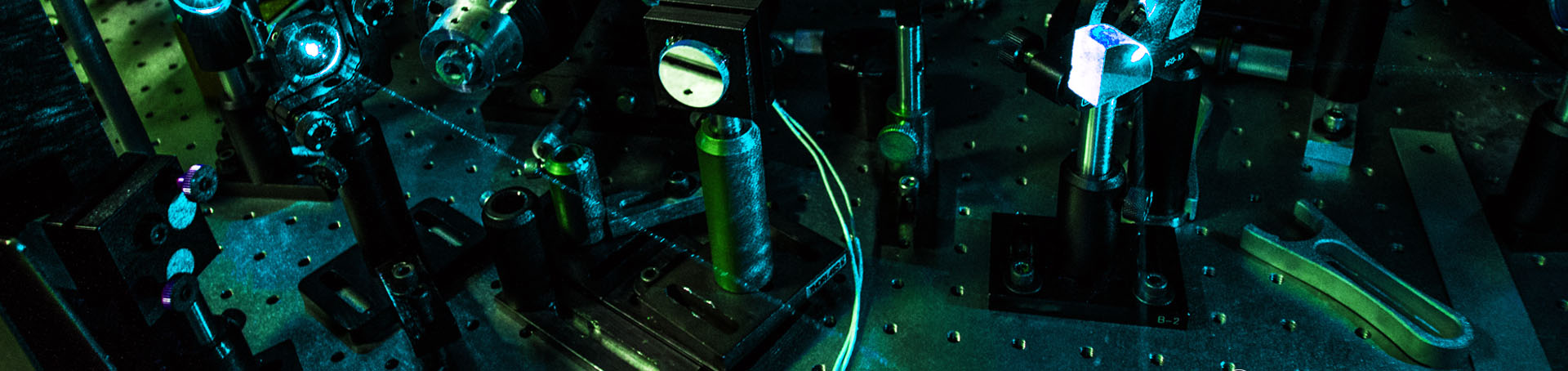
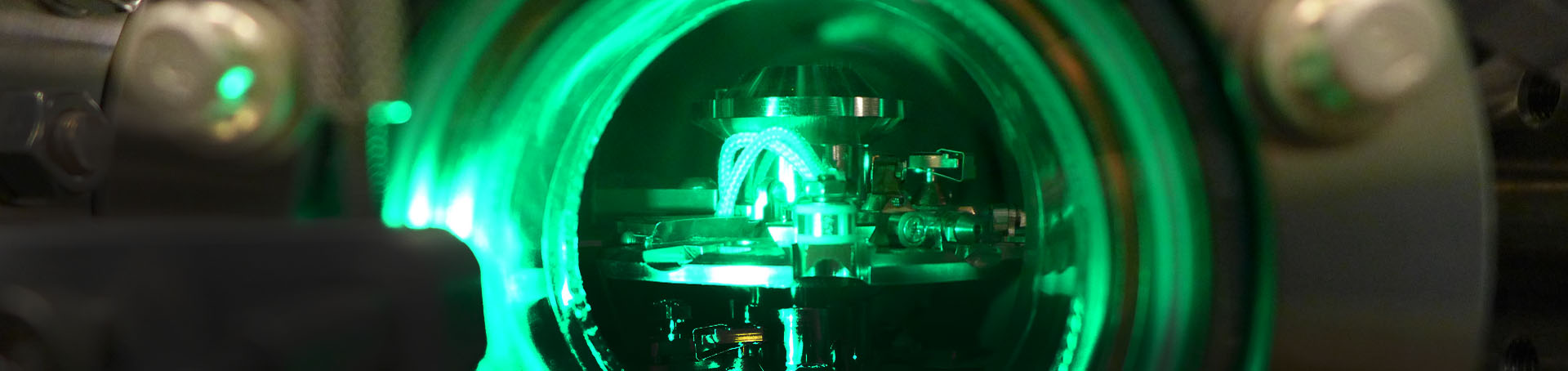
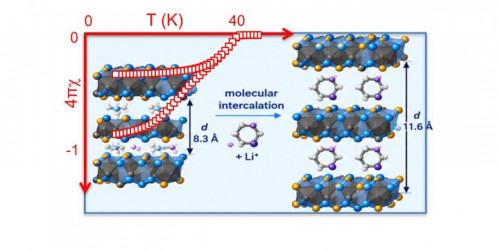
Latest work from FORTH’s QMM Lab explores a fundamental question in condensed matter physics: what drives superconductivity—enabling materials to carry electricity without resistance—and, in particular, what controls its emergence at relatively high temperatures in iron-based materials?
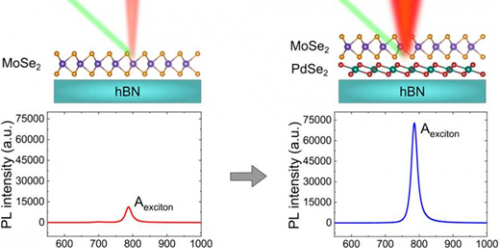
A new study published in Nano Letters highlights the strong international character of collaborative research in the field of two-dimensional materials and van der Waals heterostructures.
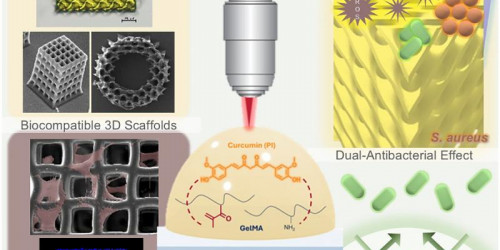
Can a natural bioactive molecule become an integral part of the 3D microfabrication process itself?
In this work, published in the journal Advanced Functional Materials, we demonstrate a one-step multiphoton lithography strategy in which curcumin serves not only as a photosensitizer for the fabrication of high-resolution GelMA 3D scaffolds, but also as a bioactive component that endows the resulting structures with advanced functional properties.
The work was carried out at the Institute of Electronic Structure and Laser (IESL), Foundation for Research and Technology-Hellas (FORTH), by the TERMIm Lab and the NLL Group, in collaboration with the Department of Materials Science and Engineering, University of Crete.
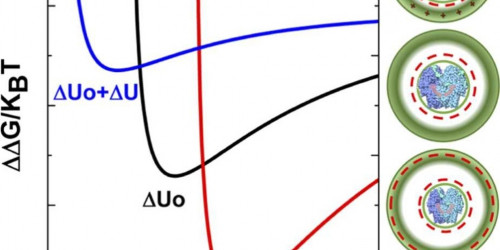
We are proud to announce the publication of a new research study by M. Androulidaki from the IESL–FORTH MRG team, in collaboration with Professor Nikos Chaniotakis from the Department of Chemistry, University of Crete. The study, entitled “Nanocage-mediated enzyme stabilization: The effect of size and charge”, has been published in the prestigious journal Sensors and Actuators B: Chemical.
Upcoming events
Seminar, 25/11/2026 - 12:00 to 14:00