
Education
- 1987, Ph.D. University of Bielefeld, Germany
- 1979, B.Sc., University of Ioannina, Greece
Career
- 2014 - today, Research Director, FORTH - IESL, Greece
- 1999 - 2014, Prinicipal Researcher, FORTH - IESL, Greece
- 1995 - 1999, Associated Researcher, FORTH - IESL, Greece
- 1991 - 1994, Visiting Professor, Physics Dpt, University of Crete, Greece
- 1988 - 1991, Research Assistant, University of Bielefeld, Germany


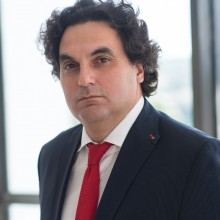
Dr. Stavros Pissadakis is a Director of Research at FORTH-IESL. He obtained his Ptichion degree in Physics from the University of Crete, Greece and his Ph.D. degree in Electrical Engineering/Photonics from the Optoelectronics Research Centre (ORC), University of Southampton, UK. He established and leads the Photonic Materials and Devices Laboratory (PMDL), which strategic vision focuses on the development of disruptive design photonic, sensing and actuating devices, for a number of diverse current and emerging application fields; covering investigations from the proof-of-principle stage and reaching device demonstration in relevant environment (TRL5). He has been employed as a Research Fellow in ORC, UK, as Visiting Lecturer in the Department of Computer and Electronic Engineering, Technical University of Crete, Greece, as Visiting Assistant Professor in Physics Department, University of Crete, and as Visiting Professor at the Information Engineering Department, University of Parma, Italy. He has been heavily involved in the European Platform Photonics21, being a member in the Board of Stakholders, chaired the national platform PhotonicsGR, while also being active in drawing research policy for Photonics and relevant technology commercialisation aspects. He has been involved into several research projects (European, national, industrial), personally attracting a total budget greater than 2.5MEuros, while coordinated targeted know-how transfer to a number of industrial partners. Dr Pissadakis has been actively participated in the research policy drawing in Institutional and Foundation level, being a member of the Scientific Board of IESL (2013-2016), and a Representative of Researchers in the Board of Directors of FORTH (2013-2014). His current scientific interests include photonic crystal and microstructured optical fiber devices, whispering gallery mode resonators, optical fiber sensors, optofluidics/magnetofluidics and study of optical materials photosensitivity. He is a Senior Member of OSA and IEEE, a Topical Editor of Applied Optics and Associate Editor of IEEE/Optica JLT.
Education
- 2021, Certificate, Business Strategy, Harvard Business School, USA
- 2000, PhD, Optoelectronics Research Centre (ORC), University of Southampton, UK
- 1994, Ptychion, Physics, University of Crete, Greece
Awards/Prizes/Distinctions
- IEEE/Optica Journal of Lightwave Technology, Associate Editor, 2023
- IEEE Senior Member, 2021
- Member of the National Council for Research and Innovation (NCRI), in the section of Technology Transfer and Intellectual Property, 2020
- Member of the board of the International Doctorate School in Information and Communication Technologies, University of Modena and Reggio Emilia, Italy, 2019
- OSA Applied Optics, Topical Editor, 2019
- Ph21 Board of Stakeholders Member, 2018
- OSA Senior Member, 2017
- Invited Professor, Excellent Courses, Politecnico di Torino, Italy, 2014
- Shortlisted 2nd “Greece Innovates”, 2013
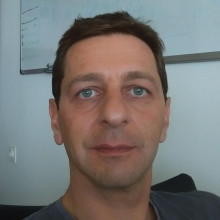
David Petrosyan received the undergraduate and PhD degrees in Physics in Armenia. After a nearly three year postdoc stay in Israel, he was hired by IESL/FORTH, first on a tenure-track position and then a permanent position.
Dr. Petrosyan specializes in theoretical quantum optics and quantum information. He has published nearly 90 scientific papers and co-authored a textbook for graduate students.
Education
- 1995 Diploma in Physics, Department of Physics, Yerevan State University, Armenia
- 1999 PhD in Laser Physics, Institute for Physical Research, Armenian National Academy of Sciences
Career
- 1997-1998 Research Fellow, Max–Planck–Institut für Quantenoptik, Germany
- 1998-2000 Research Fellow, Institute of Electronic Structure & Laser, FORTH, Greece
- 2000-2002 Postdoctoral Fellow, Department of Chemical Physics, Weizmann Institute of Science, Israel
- 2002- Research Director [A] (since 2024), Principal [B] (2006)/Associate [Γ] Researcher, IESL/FORTH, Greece
- 2006 & 2009 Humboldt Research Fellow, Department of Physics, University of Kaiserslautern, Germany
- 2014-2015 D. T. Mortensen Senior Fellow, Aarhus Institute of Advanced Studies, Aarhus University, Denmark
- 2016-2020 Visiting Associate Professor, Department of Physics and Astronomy, Aarhus University, Denmark
- 2017- Mercator Fellow, Center for Quantum Science, Physikalisches Institut Universität Tübingen, Germany
Interests
- Quantum non-linear optics with single photons and coherent atomic ensembles
- Spin lattice models with cold atoms in optical lattices, interacting Rydberg atoms
- Quantum simulations of strongly interacting few- and many-body systems
- Physical implementations of quantum information processing and communication with optical, atomic, solid-state and hybrid systems
Awards/Prizes/Distinctions
- 1997 DAAD graduate student Scholarship, Germany
- 2000 Feinberg Postdoctoral Fellowship, Israel
- 2006 Alexander von Humboldt Research Fellowship, Germany
- 2013 Dale T. Mortensen Senior Fellowship, Aarhus Institute of Advanced Studies, Denmark
- 2014 Friedrich W. Bessel Research Award of the Humboldt Foundation, Germany
- 2016 APS Outstanding Referee
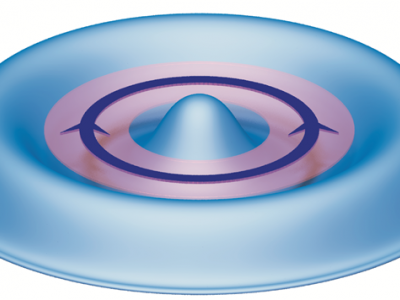
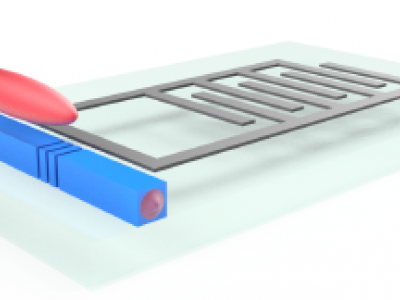

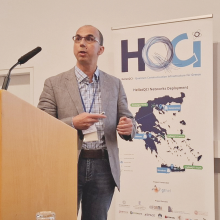
Dr. Georgios Nikolopoulos received his PhD in 2001 from the University of Crete. His PhD work was focused on the dissipative dynamics of small quantum systems, which are coupled to continua that exhibit an unconventional density of states and do not allow for standard (e.g., Born and Markov) approximations. In 2003, after his military service, he moved to TU Darmstadt where he worked as a research associate in the framework of FP6 IP SECOQC project, which focused on the development of a global network for secure communication based on quantum cryptography. Dr. Nikolopoulos joined IESL/FORTH as a Junior Researcher in 2007, and his research activities span a broad range of topics including quantum linear and non-linear optics, quantum communication, quantum cryptography, and ultracold quantum gases. In 2019 he was invited to participate as a Mercator Fellow in SFB CROSSING "Cryptography-based security solutions: Enabling Trust in New and Next Generation Computing Environments".
Education
- 2001: PhD in Physics, University of Crete, Greece
- 2001: MSc in Microelectronics-Optoelectronics, University of Crete, Greece
- 1996: Diploma in Physics, University of Patras, Greece
Career
- 2026 - today: Research Director, Institute of Electronic Structure & Laser, FORTH, Heraklion, Greece
- 2014 - 2025: Principal Researcher, Institute of Electronic Structure & Laser, FORTH, Heraklion, Greece
- 2011-2014: Assistant Researcher, Institute of Electronic Structure & Laser, FORTH, Heraklion, Greece
- 2007-2011: Junior Researcher, Institute of Electronic Structure & Laser, FORTH, Heraklion, Greece
- 2003-2006: Research Associate, Institut fuer Angewandte Physik, Technische Universitat Darmstadt, Germany
- 1997-1999: Max-Planck Research Fellow, Max-Planck Institut fur Quantenoptik, Garching, Germany (two semesters)
Interests
- Quantum Communication and Cryptography
- Quantum Information Processing
- Quantum Optics
Awards/Prizes/Distinctions
- 2022: Mercator Fellow, SFB CROSSING “Cryptography-Based Security Solutions: Enabling Trust in New and Next Generation Computing Environments”
- 2019: Mercator Fellow, SFB CROSSING “Cryptography-Based Security Solutions: Enabling Trust in New and Next Generation Computing Environments”
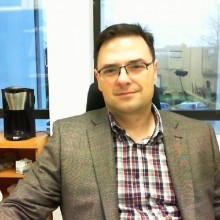
In this experimental research activity ultrafast time-resolved optical spectroscopy is employed to study the ultrafast processes that occur in condensed phase materials following intense optical excitation by ultrashort laser pulses. By utilizing the general pump-probe methodology the ultrafast electronic, lattice and magnetic interactions taking place in solids in the picosecond and the femtosecond temporal regime are investigated. Novel bulk and nanostructured photonic materials have high priority in our research with potential in modern applications such as nanocircuits, ultrafast nonlinear optical switches, high efficiency devices, energy, nanocatalysts, spintronics etc. The physics of semiconductors metals and dielectrics in confined geometries and nanostructures that exhibit novel combined optoelectronic and magnetic properties, hybrid and nanosructured materials with applications in environmental-friendly photonic devices are investigated. Strongly correlated metal oxide systems with electron correlations and combined optic and magnetic properties are in the front line of the research interest.
Education
- Batchelor’s degree in Physics, Un. Crete, Greece, 1996
- Master’s degree in Physics, Un. Of Crete, Greece, 1998
- PhD degree in Physics, Un. Crete, Greece, 2002
Career
- Marie Curie individual fellowship and postdoctoral research, Freie Un. Berlin, 2002-2007
- Greek Military Service 2007
- 2007-2008 postdoctoral research, FORTH-IESL
- 2008, Junior Researcher, FORTH-IESL
- 2011, Assistant Researcher, FORTH-IESL
- 2014, Principal Researcher, FORTH-IESL
Interests
- Ultrafast dynamics in solid state systems and condensed phase materials
- Electronic correlations in strongly correlated systems
- Nanocrystals, nanoparticles, nanostructures
- Plasmonic materials
- Reduced dimensionality systems
- Temporal Pulse Shaping applications and coherent control of ultrafast processes
- Ultrafast processes during light-surface interaction and ablation
- Lasers for Clean Energy Applications
Other
Laboratory Description
The FLASS (Femtosecond Laser Spectroscopy in Solid State) laboratory is a unique laboratory for the Greek research community based on an amplified laser source which delivers pulses of laser light at a repetition rate of 1 kHz, central wavelength at 785 nm, with maximum energy per pulse 0.8 mJ and minimum pulse duration of 25 fs. Secondary optical sources include non-collinear optical parametric amplifiers which can provide a broad range of selectable wavelengths spanning the region from the near UV to the near IR (~250nm-1500nm). Additionally a Spatial Light Modulator in a 4f optical configuration is used to modulate the temporal shape of the laser pulses in a temporal window extending to 14 ps. Together with a pump-probe workstation and the proper analysis instruments (spectrometer, monochromator, CCD imaging camera, lock-in amplifier etc.) we can perform state-of the art pump-probe time-resolved all-optical spectroscopy at a variety of condensed matter systems such as metals, (wide band gap-) semiconductors, quantum wells, thin films nanocrystals and reduced dimensionality systems. Also, the laboratory employs an additional dual-purpose workstation consisting of: 1) direct laser-surface writing for microstructure and nanostructure formation on metal, semiconductor and dielectric surfaces and 2) LIFT (Laser-Induced Forward Transfer) workstation for micro-confined deposition of thin films onto selected surfaces and substrates.
Education
- 1994 Ph. D. in Physics, Université Joseph Fourier, Grenoble
- 1989 Master of Physics (DEA Matière et Rayonnement), University J. Fourier, Grenoble
- 1988 “Ingénieur” Degree of the National Polytechnic Insitut of Grenoble (INPG), Material Physics
Career
- Researcher (C) at the polymer group IESL-FORTH, Heraklion, (from Jan 02)
- Research Assistant Dept of Physics and Astronomy, University of Sheffield. Biopolymer mixtures
- Post-Doc. At the Polymer Group / IESL-FORTH Heraklion, Greece (November 95 to September 99), in charge of the X-Ray generator and spectrometer
- Ph. D. work at the Depart. Recherche Fondamemtale Matiere Condensee/SESAM CEA-Grenoble
- Royal Institut of Technology (Stockholm), Material Physics Laboratory, 16 months (in the frame of national service)(1991-1992), Research Student
- 4 months at Cryo-Physics Laboratory, CEA-Grenoble, (1988) Measurements of Thermal Conductivities at Low Temperatures
Interests
- Structure and dynamics of soft matter: polymer and soft colloids; studied systems include polymer / colloid solutions, star polymers, biopolymers, liquid crystalline polymers, ionomers/ polyelectrolytes, surfactants, polymer brushes, hydrogels
- Structure and Dynamic close to a solid surface, confinement effect
Alexandros Lappas received a B.Sc. in Physics (1988) from the University of Crete and a D.Phil. in Chemical Physics (1993) from the School of Chemistry & Molecular Sciences at the Univ. of Sussex, UK. During 1993-95, as a Research Fellow in the Inorganic & Solid State Chemistry division of Sussex University, he became interested in the field of fullerene-based magnets & superconductors. After his compulsory military service (1996-97) in Greece, he moved back to Sussex as a Temporary Lecturer (Inorganic & Physical Chemistry curriculum). He was elected to a tenure-track Researcher (1999) in Materials Science at the Institute of Electronic Structure and Laser in FORTH, where he is presently a Director of Research (equivalent to a University Professor position). In parallel, Dr Lappas has taught materials physics courses, as an Adjunct Professor in the Univ. of Crete. As a Visiting Researcher and principal investigator, he has been working at world renowned large-scale synchrotron X-ray (Brookhaven National Lab), neutron (Rutherford Appleton Lab) and muon (Paul Scherrer Institute) science facilities in USA and Europe for over 30 years.
His team works in the field of experimental condensed matter physics and materials science, studying electronic phenomena and phase transitions in correlated electron systems and other quantum materials that tackle society’s challenges in energy. He leads the Quantum Materials & Magnetism lab at FORTH, integrating materials synthesis, bespoke physical-property measurements (magnetic, dielectric, transport), and advanced diffraction and spectroscopy. Dr Lappas has initiated and successfuly led a number of internationally funded (EC, ONRG) research projects. In addition, he served in posts such as, in conference program committees and a panel member of R&D actions supervised by GSRI. Moreover, he has been the advisor of young scientists that have completed their PhD (7) or MSc (8) research in materials physics/ chemistry, and was honored to be a “Fulbright Fellow – Greece” (2016-17) for lecturing and conducting research in the United States. He has published more than 115 refereed journal articles and disseminated his research through invited lectures (35) and numerous contributed talks (49) at international conferences (h-index= 29; ResearcherID: F-6771-2011).
Alongside his research activities, Dr Lappas has contributed to institutional governance and national science policy through elected leadership roles at FORTH, including service as Head of the NanoElectronics, Photonic and Quantum Materials Division (2023-25), member of the IESL Scientific Council (2006-2018; consecutive terms), and Vice-Chair of the Union of FORTH Tenure-Track Researchers (2012-14). He has also served on national expert committees advising the Greek Government (GSRI) on European Research Infrastructures (2004) and the Hellenic Federation of Enterprises (SEV) on nanotechnology policy (2011-15).
Education
- 1993, D.Phil., Chemical Physics; School of Chemistry & Molecular Sciences, University of Sussex , UK
- 1988, B.Sc., Physics (upper 2nd class honors); Dept. of Physics, University of Crete, Greece
Career
- 2012– present Research Director (Grade A; open-ended); IESL - FORTH, Greece
- 2002 – 2012 Principal Researcher (Grade B; tenure); IESL - FORTH, Greece
- 2005 – 2008 Adjunct Professor; Department of Physics, University of Crete, Greece
- 2001 – 2005 Adjunct Professor; Department of Materials Science and Technology, University of Crete, Greece
- 1998 – 2002 Associated Researcher (Grade C; tenure-track); IESL - FORTH, Greece
- 1997 – 1998 Temporary Lecturer; School of Chemistry, University of Sussex, UK
- 1993 – 1995 Postdoctoral Fellow; School of Chemistry, University of Sussex, UK
Interests
- workings of quantum materials at variable length and time scales by photon & neutron science (structural & spectroscopic) probes
- collective electronic phenomena & symmetry breaking phase transitions (physical crystallography)
- frustration-driven instabilities (order by disorder) in transition metal layered oxides
- intertwined charge carriers & magnetic moments in iron-chalcogenides
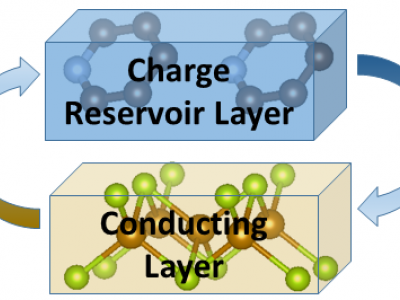
- smart energy-materials’ solutions for grid technologies (cf. superconductors & battery materials)
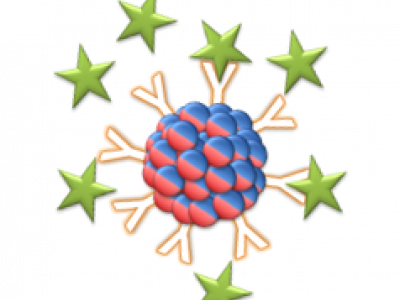
- colloidal nanocrystals with size-, shape-, assembly- enhanced functionality (cf. theranostics)
Awards/Prizes/Distinctions
- 2018: Presented with the “Gold Medal of the City” of Xanthi, as a City ambassador in sciences and environment; Municipality of Xanthi, Greece
- 2016: Recipient of a “Fulbright Visiting Scholars Award”, Fulbright Foundation, Athens, Greece
- 2015: Recipient of a “Chaire TOTAL - Pôle Chimie Balard”, Fondation Balard, Montpellier, France
- 2003: Visiting Fellowship at Kyoto University; YAMADA Science Foundation, Osaka, Japan
- 2000: Award for Scientific Research at IESL-FORTH; EBEIRIKIO Foundation, Athens, Greece
- 1990 – 1993: Research Bursary, BRITE-EURAM Programme on Advanced Materials; Commission of the European Communities, Brussels, Belgium
- 1989 – 1992: Research Studentship (Quota Award); Science and Engineering Research Council, UK
- 1983 – 1984: Prize for excellence in Physics, University of Crete; State Scholarships Foundation – IKY, Greece

RETIRED
Education
- 2009, Ph.D., Physics department, University of Crete, Greece
- 2004, M.Sc., Physics department, University of Crete, Greece
- 2001, B.Sc., Physics department, University of Crete, Greece
Career
- 12/2016 - today, Post Doctoral Researcher, Microelectronics Research Group (MRG), FORTH - IESL, Greece
- 10/2015 - 11/2016, Research associate, Physics Dpt, University of Crete, Greece
- 02/2010-09/2015, Research associate, Microelectronics Research Group (MRG), FORTH - IESL, Greece
Interests
- III-Nitride wide band gap semiconductors
- Molecular Beam Epitaxy growth of III-Nitrides
- III-nitride based Heterostructures and Nanostructures for Electronic and Optoelectronic applications
