

Σημαντική επιτυχία για την ελληνική και ευρωπαϊκή ερευνητική κοινότητα αποτελεί η ένταξη της πρότασης NANO Foundries and Fine Analysis – 2050 (NFFA2050) στον Οδικό Χάρτη ESFRI 2026, όπως ανακοινώθηκε από τον Πρόεδρο του ESFRI στις 25 Ιουνίου 2026.
Το Ίδρυμα Τεχνολογίας και Έρευνας (ΙΤΕ), μέσω του Ινστιτούτου Ηλεκτρονικής Δομής και Λέιζερ (ΙΗΔΛ), συμμετείχε ως ένας από τους τρεις βασικούς αιτούντες και ένα από τα οκτώ ιδρύματα που υπέγραψαν το σχετικό Μνημόνιο Συνεργασίας, επιβεβαιώνοντας τον πρωταγωνιστικό του ρόλο στη διαμόρφωση της νέας ευρωπαϊκής ερευνητικής υποδομής.
Το NFFA2050 αποτελεί τη φυσική εξέλιξη της επιτυχημένης 11ετούς λειτουργίας του NFFA-Europe, μέσω του οποίου περισσότεροι από 3.000 ερευνητές απέκτησαν πρόσβαση σε περισσότερες από 180 ερευνητικές μεθόδους και 600 εξειδικευμένα επιστημονικά όργανα. Η νέα υποδομή θα προσφέρει ένα ολοκληρωμένο ευρωπαϊκό περιβάλλον για την έρευνα στην κβαντική ύλη, στα προηγμένα ενεργειακά υλικά και στα βιοϋλικά, συνδυάζοντας δυνατότητες από μεγάλες ερευνητικές εγκαταστάσεις με προηγμένα ακαδημαϊκά όργανα για πολυτεχνικές πειραματικές προσεγγίσεις και θεωρητική έρευνα.
Βασικός στόχος του NFFA2050 είναι η δημιουργία ενός νέου, ψηφιακά ενισχυμένου ερευνητικού οικοσυστήματος, όπου οι χρήστες θα έχουν πρόσβαση σε ολοκληρωμένες και βελτιστοποιημένες ροές εργασίας, προσαρμοσμένες στις ανάγκες της έρευνάς τους. Για τον σκοπό αυτό, η υποδομή θα ενσωματώνει υπηρεσίες βελτιστοποίησης πρόσβασης βασισμένες στην Τεχνητή Νοημοσύνη, Ψηφιακά Δίδυμα (Digital Twins), δεδομένα σχεδιασμένα σύμφωνα με τις αρχές FAIR (FAIR-by-design) και προηγμένες δυνατότητες ανάλυσης σε πραγματικό χρόνο.
Παράλληλα, η υποδομή θα υποστηρίζει τόσο τη βασική έρευνα όσο και έργα καινοτομίας, δημιουργώντας ένα προηγμένο ερευνητικό περιβάλλον για την ανάπτυξη και αξιολόγηση τεχνολογιών βαθιάς τεχνολογίας (deep-tech), τη συνδημιουργία πρωτοτύπων με βιομηχανικό προσανατολισμό και τη διασύνδεση με τις Τεχνολογικές Υποδομές σε ενδιάμεσα επίπεδα τεχνολογικής ωριμότητας (TRLs).
Η ένταξη του NFFA2050 στον Οδικό Χάρτη ESFRI αποτελεί καθοριστικό βήμα για την υλοποίηση της υποδομής, καθώς θέτει τις βάσεις για την οργάνωση και τη λειτουργία της σε ευρωπαϊκό επίπεδο, την εξασφάλιση των απαιτούμενων πόρων και την ανάπτυξη συνεργειών με το ευρωπαϊκό οικοσύστημα ερευνητικών υποδομών στον τομέα των Φυσικών Επιστημών και Μηχανικής, καθώς και σε συναφείς επιστημονικούς και τεχνολογικούς τομείς.
Η επιτυχία αυτή ακολουθεί την έγκριση μιας ακόμη ερευνητικής υποδομής ESFRI υπό τον συντονισμό του ΙΗΔΛ, της E-RIHS, η οποία λειτουργεί πλέον υπό τη μορφή ERIC, ενισχύοντας περαιτέρω τον ρόλο του ΙΤΕ ως ενός από τους σημαντικότερους ελληνικούς και ευρωπαϊκούς φορείς στον σχεδιασμό, την ανάπτυξη και τη λειτουργία ερευνητικών υποδομών διεθνούς εμβέλειας.
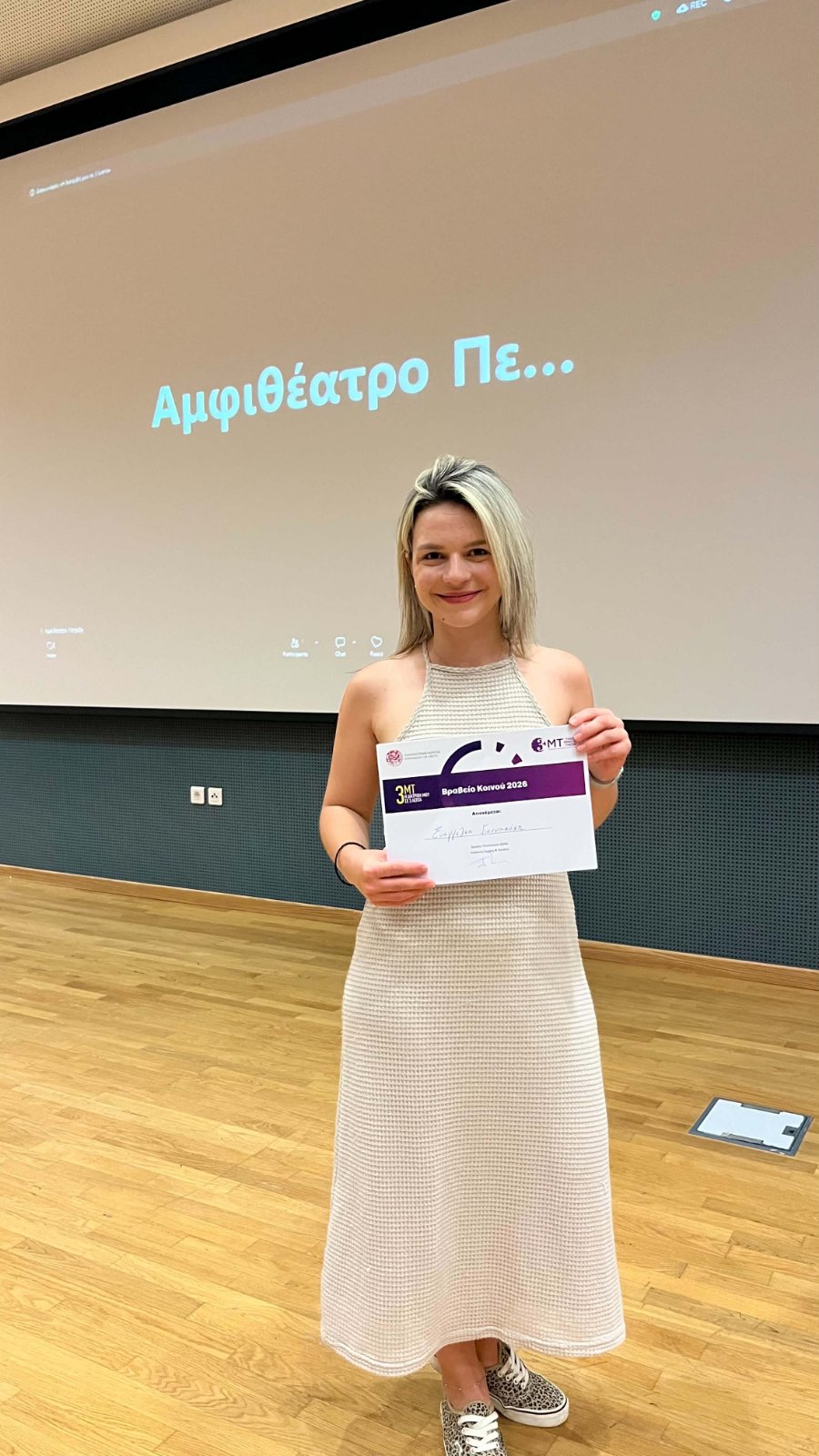
Το Ινστιτούτο Ηλεκτρονικής Δομής και Λέιζερ (ΙΗΔΛ) του ΙΤΕ εκφράζει τα θερμά του συγχαρητήρια στην Υποψήφια Διδάκτορα του Τμήματος Χημείας του Πανεπιστημίου Κρήτης, Ευαγγελία Γιαννακάκη, για την εξαιρετική της διάκριση στον διαγωνισμό «Η Διατριβή μου σε 3 λεπτά», όπου απέσπασε το Βραβείο Κοινού. Η διάκριση αυτή αποκτά ιδιαίτερη αξία καθώς προέκυψε ύστερα από μια απαιτητική διαγωνιστική διαδικασία δύο φάσεων, στην οποία συμμετείχαν υποψήφιοι διδάκτορες από διαφορετικά επιστημονικά πεδία. Στην πρώτη φάση επιλέχθηκαν οι δέκα καλύτερες υποψηφιότητες, ενώ στη δεύτερη και τελική φάση, που πραγματοποιήθηκε στις 10 Ιουνίου, απονεμήθηκαν συνολικά τρία βραβεία: δύο από την κριτική επιτροπή και ένα από το κοινό, το οποίο κατέκτησε η Ευαγγελία Γιαννακάκη.
Η Ευαγγελία εκπονεί τη διδακτορική της διατριβή στην Ομάδα Λειτουργικών Πολυμερικών Νανοδομών (Functional Polymer Nanostructures) του ΙΗΔΛ, με αντικείμενο την ανάπτυξη αυτοϊάσιμων πολυμερικών υλικών, τα οποία έχουν τη δυνατότητα να αποκαθιστούν μικρές φθορές μέσω της εφαρμογής θερμότητας. Η έρευνά της στοχεύει στη δημιουργία καινοτόμων υλικών που μπορούν να συμβάλουν στη μείωση του κόστους συντήρησης, των αποβλήτων και της σπατάλης πόρων, ενισχύοντας τη βιωσιμότητα και την κυκλική οικονομία , ενώ παράλληλα συμβάλλει στην παραγωγή νέας γνώσης και στην προώθηση της επιστημονικής αριστείας.
Η διάκρισή της αποτελεί αναγνώριση της ποιότητας του ερευνητικού της έργου, αλλά και της αφοσίωσης, της δημιουργικότητας και της επιστημονικής της κατάρτισης. Παράλληλα, αναδεικνύει το υψηλού επιπέδου ερευνητικό και εκπαιδευτικό περιβάλλον που προσφέρει το ΙΗΔΛ, το οποίο επενδύει συστηματικά στην εκπαίδευση και την εξέλιξη νέων επιστημόνων, παρέχοντάς τους τα εφόδια για να διακρίνονται τόσο στην έρευνα όσο και στην επικοινωνία της επιστήμης προς την κοινωνία. Η επιτυχία της αποτελεί ιδιαίτερη τιμή για το Ινστιτούτο, καθώς επιβεβαιώνει την ποιότητα της έρευνας που διεξάγεται στο ΙΗΔΛ και υπογραμμίζει τη σημασία της σύνδεσης της επιστημονικής γνώσης με το ευρύτερο κοινό. Ως νέα ερευνήτρια, η Ευαγγελία αποτελεί ένα ιδιαίτερα θετικό πρότυπο για τη νέα γενιά επιστημόνων, ενώ η διάκρισή της αναδεικνύει και τη σημαντική συμβολή των γυναικών στην έρευνα, την καινοτομία και την επιστημονική πρόοδο.
Αναφερόμενη στην ερευνητική της πορεία, η Ευαγγελία σημείωσε ότι η ποιότητα της ερευνητικής ομάδας και του επιστημονικού περιβάλλοντος αποτέλεσαν καθοριστικούς λόγους για να συνεχίσει την ερευνητική της δραστηριότητα στην Ελλάδα, αναδεικνύοντας τη σημασία των ισχυρών ερευνητικών υποδομών και της επιστημονικής καθοδήγησης που προσφέρει το ΙΗΔΛ.
Θερμά συγχαρητήρια στην Ευαγγελία για την επιτυχία της. Της ευχόμαστε ολόψυχα καλή συνέχεια στην ακαδημαϊκή και ερευνητική της πορεία, με ακόμη περισσότερες επιτυχίες και διακρίσεις στο μέλλον, καθώς και κάθε επιτυχία στην προσπάθειά της να μετατρέψει τα ερευνητικά της αποτελέσματα σε εφαρμογές με ουσιαστικό κοινωνικό και περιβαλλοντικό αντίκτυπο.
Η επιτυχία νέων ερευνητριών όπως η Ευαγγελία Γιαννακάκη αποτελεί έμπρακτη απόδειξη ότι η επένδυση στη νέα γενιά επιστημόνων και η ενίσχυση της συμμετοχής των γυναικών στην έρευνα αποδίδουν καρπούς και συμβάλλουν ουσιαστικά στη διαμόρφωση του μέλλοντος της επιστήμης και της καινοτομίας.
Οι τρεις βραβευθείσες ερευνήτριες προσκλήθηκαν την επόμενη ημέρα στην εκπομπή της κας Αντιγόνης Ανδρεαδάκη στον ραδιοφωνικό σταθμό CRETAONE, όπου μίλησαν για την έρευνά τους, την εμπειρία τους από τον διαγωνισμό και τη σημασία της επικοινωνίας της επιστήμης προς το ευρύ κοινό.
Διαβάστε τη συνέντευξη στο CRETAONE: Οι νέες ερευνήτριες του Πανεπιστημίου Κρήτης που ξεχώρισαν στη «Διατριβή σε 3 Λεπτά»
Supported through a Theodore Papazoglou FORTH Synergy Grant (Spectra-Gen: Spectroscopic Screening of Ancient Dental Remains for Optimized Archaeogenetic Analysis), researchers from IESL-Photonics for Heritage Science group, IMBB- Ancient DNA Lab, and ICS, studied a large number of ancient teeth, originating from various excavations and contexts in Greece and across a time span of 8 millennia.
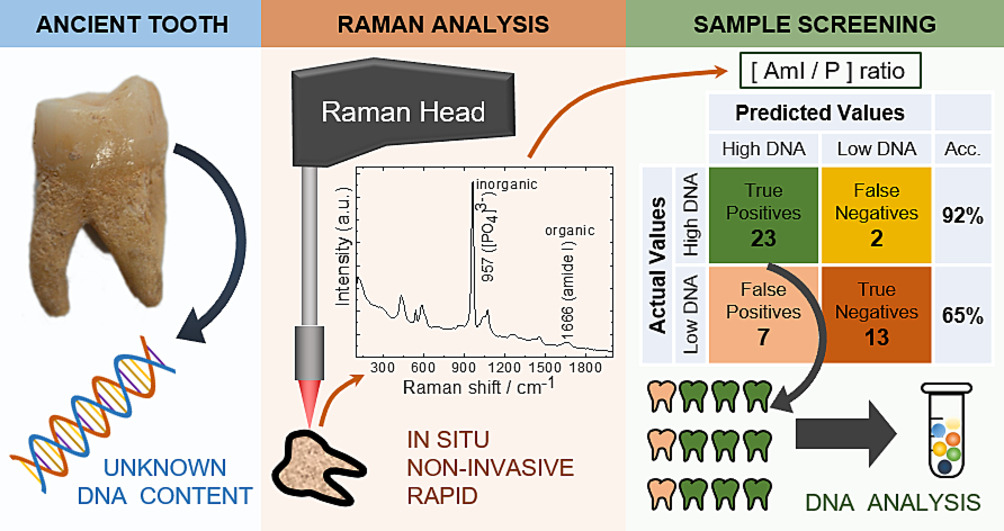
In the context of this study, published recently in the Microchemical Journal, doi: org/10.1016/j.microc.2026.117446, a straightforward and fast spectrochemical methodology, based on micro-Raman spectrometry, was developed and shown to serve as a suitable tool for screening teeth prior to genetic analysis, predicting which ones might exhibit a higher human DNA preservation.
As detailed in the article by A Philippidis et al, screening is achieved on the basis of a simple molecular index, the amide-to-phosphate ratio (Am-I/P), extracted from key vibrational bands in the Raman spectra, which serves as a proxy of the dental tissue protein content (typically collagen) relative to hydroxyapatite, namely the inorganic matrix. Analysis is performed, non-invasively, directly on intact teeth, by use of a compact, mobile micro-Raman spectrometer, focusing the laser probe on the cementum part, known to be protein rich. Ancient DNA analysis showed that teeth found to preserve endogenous human DNA, to a reasonable degree, showed indeed a good statistical correlation with the ones identified to be protein-rich based on the Am-I/P.

Dr. Giannis Zacharakis, a biophotonics and biomedical imaging researcher and CEO of Kymatonics, was featured in the “Ask Me Anything” interview series by Physics World, where scientists share insights into their careers and the realities of research.
Dr. Zacharakis is a Research Director at the Institute of Electronic Structure and Laser (FORTH) in Greece, where he leads the Laboratory for Biophotonics and Molecular Imaging. He has also served as president and vice-president of the European Society for Molecular Imaging, with his work focusing on developing key enabling technologies for imaging biological processes in living systems.
In the aforementioned interview, he highlights the intellectual freedom that comes with pursuing meaningful scientific questions and emphasizes the interdisciplinary nature of his work at the interface of physics, biology, and biomedicine. He describes research as a non-linear process, where progress often emerges through exploration, iteration, and openness to unexpected directions.
His perspective underscores the importance of analytical thinking, creativity, communication, and project management, alongside mentoring young scientists and fostering independent thought. It is especially meaningful to work alongside a principal investigator who approaches research with this mindset, valuing curiosity, critical thinking, and the process behind discovery.
At the same time, he acknowledges the challenges of uncertainty, competitive funding, and administrative demands. Reflecting on his journey, he stresses that embracing uncertainty, strengthening communication skills, and cultivating collaboration are essential for long-term growth in research. Ultimately, he values an environment driven by curiosity and critical thinking, where the process of discovery is just as important as the outcome.
Read the full interview: https://physicsworld.com/a/ask-me-anything-giannis-zacharakis-the-ability-to-pursue-questions-that-genuinely-interest-you-is-a-privilege/

Conceptualised, developed and constructed in the context of the CALLOS project, TRIENA is a compact, portable, field-ready analytical instrument, fusing three spectrochemical techniques: Laser-Induced Breakdown Spectroscopy, LED-Induced Fluorescence, and Diffuse Reflectance spectroscopy.
Since October 2023, right with the completion of CALLOS, this innovative analytical instrument has been installed at the conservation labs of the Ephorate of Antiquities of the City of Athens (EACA), and used by conservators in the context of studies related to the preservation of heritage objects, including, among others, stone sculpture, wall paintings, icons and manuscripts. The Photonics for Heritage Science (PhoHS) group collaborates closely with conservation scientists at EACA developing further protocols and methods for analyzing materials and objects. Routine use of TriENA in materials analysis, not only in the EACA labs but also outdoors, at monument sites in the Athens area, is expected to enhance the scientific support for crucial ongoing research and preservation initiatives.
Details concerning the TRIENA concept along with engineering aspects and relevant examples, demonstrating the instrument’s performance, are described in an article recently published in Analytical Chemistry, titled "TriENA: a portable, hybrid multimode spectrometer combining Diffuse Reflectance, LED-Induced Fluorescence, and Laser-Induced Breakdown Spectroscopy for a holistic analysis of materials on monuments and objects of archaeological interest" (https://doi.org/10.1021/acs.analchem.5c05236).
In 2025, the Journal of Physics B: Atomic, Molecular and Optical Physics (IOP Publishing) highlighted a selection of outstanding works that shaped atomic and molecular physics during the year. Among these was a review article led by researchers from the Foundation for Research and Technology-Hellas (FORTH), Institute of Electronic Structure and Laser (IESL), underscoring the institute’s leading role in research on strong-field and quantum light–matter interactions.
The article, entitled “Recent developments in the generation of non-classical and entangled light states using intense laser–matter interactions” was authored by Th. Lamprou, N. Tsatrafyllis, and P. Tzallas from IESL-FORTH, in collaboration with P. Stammer, J. Rivera-Dean, and M. Lewenstein from ICFO (Spain), as well as M. F. Ciappina from the Guangdong Technion—Israel Institute of Technology. Its inclusion in the 2025 highlights reflects both its scientific impact and the international visibility of research carried out at IESL-FORTH.
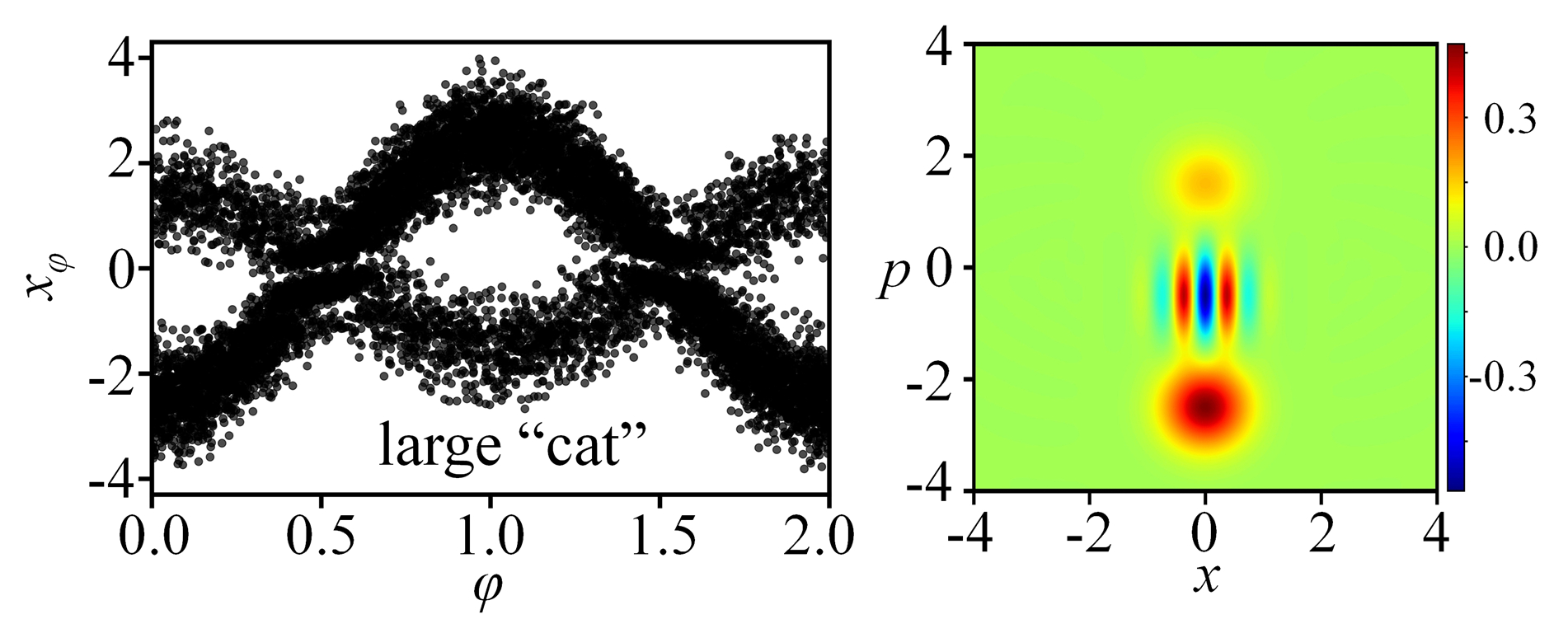
In this work, the researchers examined the fundamental importance of non-classical and entangled light states in quantum mechanics and their growing relevance for emerging quantum technologies. They emphasized the need for developing efficient methods to generate such states and reviewed recent evidence showing that intense laser–matter interactions can provide a powerful pathway toward this goal. In particular, they discussed how fully quantized theoretical approaches, combined with the process of high-harmonic generation, enable the production of high-photon-number non-classical and entangled light spanning frequencies from the far-infrared to the extreme-ultraviolet. The authors outlined the core operational principles behind these approaches and analyzed recent progress, as well as future perspectives, in non-classical light engineering using strong optical fields. They further highlighted the potential applications of these advances in ultrafast science and quantum information, concluding that these developments mark an important step toward novel quantum nonlinear spectroscopy techniques based on the interplay between the quantum properties of light and quantum matter.
Reference
Lamprou, T., Stammer, P., Rivera-Dean, J., Tsatrafyllis, N., Ciappina, M. F., Lewenstein, M., & Tzallas, P. (2025). Recent developments in the generation of non–classical and entangled light states using intense laser–matter interactions. Journal of Physics B: Atomic, Molecular and Optical Physics. 58(13), 132001. Doi: 10.1088/1361-6455/add9fe
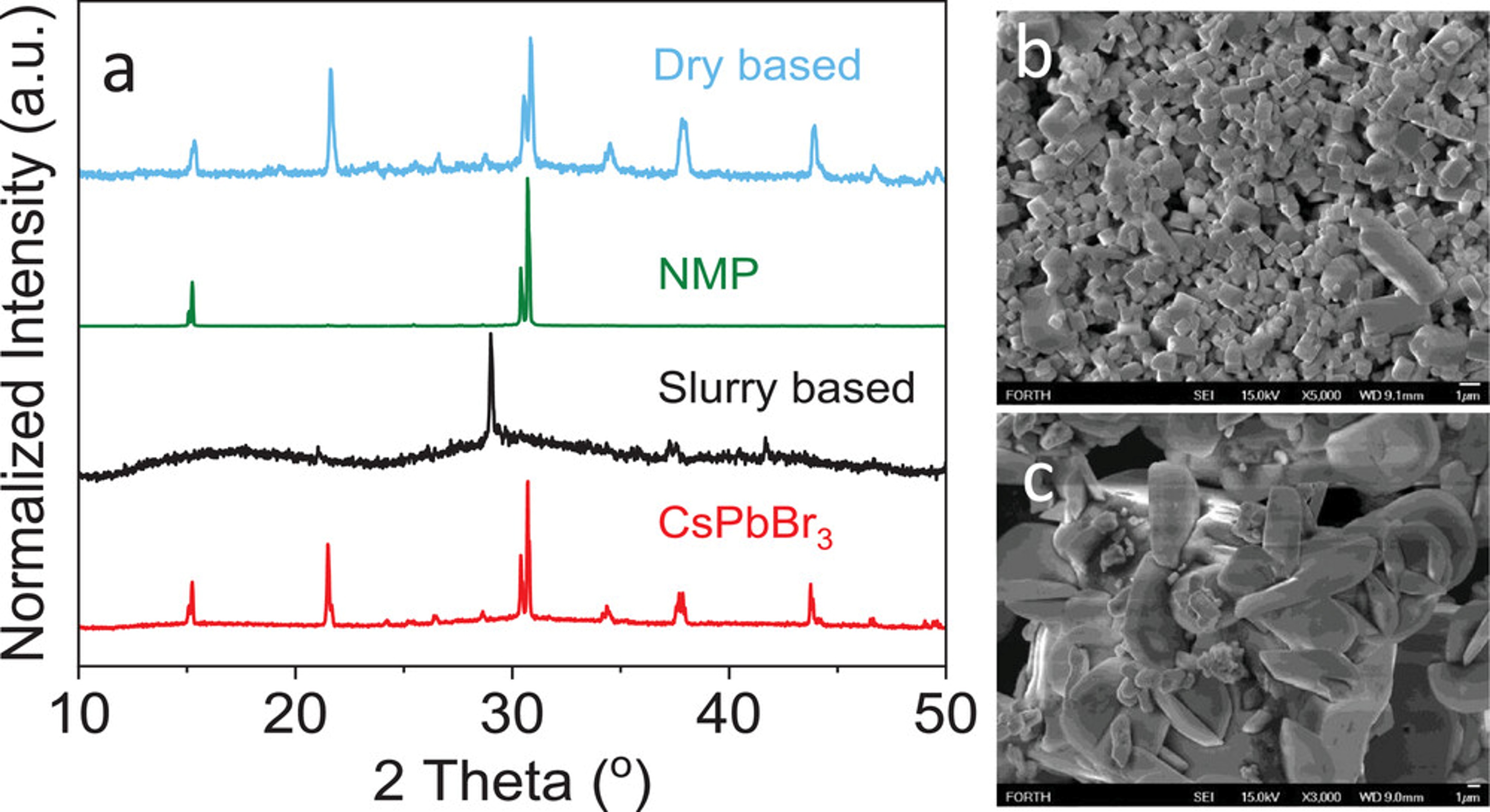
The open access research paper entitled "Processing and Compositional Effects on the Stability of All-Inorganic Metal Halide Perovskite Anodes: A Comparative Study of Dry- vs. Slurry-Fabricated Electrodes," resulting from a collaboration between the Institute of Electronic Structure and Laser (IESL-FORTH), the Democritus University of Thrace (DUTH), and the University of Crete, has been published in the prestigious journal Advanced Materials Technologies (Wiley).
The study was led by Drs Konstantinos Brintakis and Athanasia Kostopoulou from the Ultrafast Laser Micro- and Nano-Processing (ULMNP) Group at IESL-FORTH, and Dr Georgios Zardalidis from the Micro & Nano Technology Lab at the Democritus University of Thrace.
This research addresses a critical gap in the development of next-generation energy storage materials, demonstrating that the stability of all-inorganic metal halide perovskite anodes is critically dependent on the electrode fabrication method—a factor often overlooked in the field. The team provides a comparative analysis of the structural and electrochemical performance of anodes fabricated via conventional slurry-casting versus solvent-free dry-processing, utilizing both lead-based (CsPbBr3) and lead-free (Cs2AgBiBr6) perovskites.
The researchers discovered that the conventional slurry process induces a catastrophic degradation of the CsPbBr3 structure into its constituent products before cycling even begins. In contrast, the dry-processing method successfully preserves the pristine crystalline phase of the material. Consequently, the dry-fabricated CsPbBr3 electrode exhibits excellent cycling stability driven by a reversible Li-Pb alloying mechanism, significantly outperforming the rapidly fading Cs2AgBiBr6 anode. These findings highlight that for this class of sensitive materials, optimizing the fabrication process to prevent chemical degradation is a primary and critical step toward achieving stable electrochemical performance.
Funding: The research project is implemented in the framework of the H.F.R.I call "Basic research Financing (Horizontal support of all Sciences)" under the National Recovery and Resilience Plan "Greece 2.0" funded by the European Union – NextGenerationEU (H.F.R.I. Project No. 16465).
Publication: K. Markopoulos, F. Bairamis, G. Zardalidis, et al. “Processing and Compositional Effects on the Stability of All-Inorganic Metal Halide Perovskite Anodes: A Comparative Study of Dry- vs. Slurry-Fabricated Electrodes.” Advanced Materials Technologies (2026): e02618. https://doi.org/10.1002/admt.202502618

Research Paper Featured in JPhys Materials Curated Collection
The peer-reviewed research paper entitled “Self-powered, flexible and room temperature operated solution processed hybrid metal halide p-type sensing element for efficient hydrogen detection”, resulting from a collaboration between the Institute of Electronic Structure and Laser (IESL–FORTH), the University of Crete, and the Hellenic Mediterranean University (HMU), has been selected for inclusion in a curated collection of JPhys Materials (IOP Publishing).
This curated collection highlights outstanding publications in the field of Functional Intelligent Materials and is compiled by members of the journal’s Editorial Board with expertise in functional materials.
The collection is updated bi-annually and features recent high-impact papers published in JPhys Materials that demonstrate scientific excellence and innovation.
This distinction reflects the quality, impact, and relevance of the research and underscores the strength of the collaborative effort.
Abstract
Hydrogen (H2) is a well-known reduction gas and for safety reasons is very important to be detected. The most common systems employed along its detection are metal oxide-based elements. However, the latter demand complex and expensive manufacturing techniques, while they also need high temperatures or UV light to operate effectively. In this work, we first report a solution processed hybrid mixed halide spin coated perovskite films (CH3NH3PbI3−xClx) that have been successfully applied as portable, flexible, self-powered, fast and sensitive hydrogen sensing elements, operating at room temperature. The minimum concentrations of H2 gas that could be detected was down to 10 ppm. This work provides a new pathway on gases interaction with perovskite materials, poses new questions that must be addressed regarding the sensing mechanisms involved. The utilization of halide perovskite sensing elements demonstrates their potential beyond solar cell applications.
Reference
Gagaoudakis, E., Panagiotopoulos, A., Maksudov, T., Moschogiannaki, M., Katerinopoulou, D., Kakavelakis, G., ... & Petridis, K. (2020). Self-powered, flexible and room temperature operated solution processed hybrid metal halide p-type sensing element for efficient hydrogen detection. Journal of Physics: Materials, 3(1), 014010. Doi: 10.1088/2515-7639/ab60c3

The Soft Matter Division of IESL-FORTH demonstrated its scientific excellence during the 15th Hellenic Polymer Society International Conference (POLYCONF15), held in Patras during December 3-6, 2025.
We are particularly proud for two of our talented PhD students who were awarded top honors at the conference:
Ms. Franceska Gojda from the Functional Polymer Nanostructures group, working under the supervision of Dr. Kiriaki Chrissopoulou and Prof. Spiros H. Anastasiadis, received a Best Oral Presentation Award, for her innovative research on the development of superhydrophobic polymer nanocomposite coatings exhibiting water repellent properties for antifouling and antimicrobial applications.
Ms. Thaleia-Michaela Chatzaki from the Polymer Electronics and Bioelectronics Lab, supervised by Dr. Eleni Pavlopoulou, received a Best Poster Award for her outstanding research on the development of novel PEDOT-based blends for electronic skin applications.
These prestigious awards during this illustrious gathering of polymer scientists from Greece and abroad reflect the exceptional talent of our PhD students and the world-class research environment within the Soft Matter Division of IESL.
We congratulate Franceska and Michaela on their well-deserved recognition.
Laser-assisted cleaning has become an essential tool in cultural heritage conservation, offering unmatched precision, control, and environmental compatibility. Yet, the complexity of surface deposits and the fragile condition of historic materials demand continuous monitoring to ensure safe and effective restoration.
At the Institute of Electronic Structure & Laser (IESL) – FORTH, researchers are addressing these challenges by developing next-generation methodologies that bridge high-end technology with the specific needs of cultural heritage preservation.
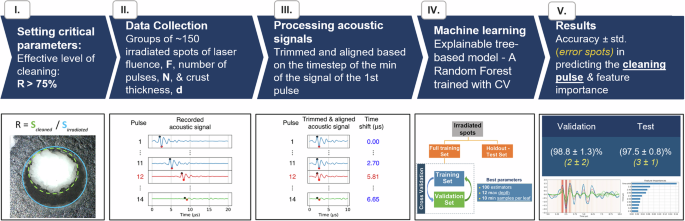
Building on this commitment to innovation, we are proud to announce the publication of the latest breakthrough study of the Photonics for Heritage Science group (https://www.iesl.forth.gr/en/research/photonics-heritage-science, https://phohs.iesl.forth.gr/) at IESL - FORTH: “Machine learning assisted real-time acoustic monitoring of laser cleaning in Heritage conservation,” published in npj Heritage Science, part of the Nature Partner Journals (npj) Series. Authored by Georgios D. Barmparis, Kristalia Melessanaki, G. P. Tsironis, George Tserevelakis, and Paraskevi Pouli, in collaboration with A.- N. Raikidis (undergraduate student) from the Department of Physics at the University of Crete, this work represents a major step toward data-driven, intelligent restoration technologies.
This study marks the beginning of a new era in laser cleaning for Heritage conservation — the first feasibility study demonstrating how real-time acoustic monitoring, combined with explainable machine learning models, can guide conservators in making informed decisions during laser cleaning. By analyzing the acoustic signatures generated during the laser–material interaction, the method can identify the exact laser pulse that fully removes unwanted layers without risking damage to the original artwork or substrate.
This research opens a new chapter in heritage conservation — where advanced AI meets the delicate art of preserving cultural treasures. It sets the foundation for smart, reliable, and safe laser cleaning protocols that support conservators in their mission to protect and restore our shared cultural heritage.
Read the full article here: https://rdcu.be/eS3QR
