


At IESL-FORTH since 1990 as specialized technical scientist
Areas of expertise include:femtosecond excimer-dye laser system,excimer lasers,Nd:YAG lasers and systems,optoelectronics,experimental setups,student training
Education
- University of Thessaloniki Physics Department
- Graduate studies on excimer lasers at the National Hellenic Research Foundation ,Athens
Awards/Prizes/Distinctions
- Best support staff award 2002

Education
- 2002, BSc in Physics, Aristoteleion Apnepistimion THessalonikis, Greece
- 2007, MSc in Art Conservation Science, Aristoteleion Apnepistimion THessalonikis, Greece
Career
- 2017 - Present, Research Assistant at Römisch-Germanisches Museum
- 2017- Present, Research Assistant at Max Planck Insitute for Polymer Research
- 2005- 2017 Physicist Mcs In COnservation Science IESL -FORTH
Education
- 1991, M.Sc in solid state physics, Physics Dpt, University of Crete, Greece
- 1987, B.Sc in Physics, Physics Dpt, University of Crete, Greece
Career
- 1991 - today, Technician, Microelectornics Research Group, FORTH - IESL, Greece
- 1987 - 1991, Research assistant, Amorhpous semiconductor Lab, FORTH - IESL, Greece
Interests
- optical semiconductor characterization
- optoelectronic device characterization
Dr. Athanasios Zacharopoulos received his Degree in Mathematics, 1999, from the Department of Mathematics in the Aristotle’s University of Thessaloniki. After an MSc in Vision Imaging and Virtual Environments he completed his PhD thesis “Three-Dimensional Shape-Based Reconstructions in Medical Imaging” from the Computer Science Department in University College London. His main research interests lay in the field of (Biomedical) Imaging and more specifically 3D Image Reconstruction algorithms, Inverse problems, Parametric description of 3D surfaces and Boundary Element – Finite Elements modelling with main focus on the applications of Optical Tomography. He has been working as a Research Associate at FORTH since 2009.
Other positions: Research Associate in the Computer Science Dept. and the Centre for Medical Image Computing (CMIC) of University College London 2005-2012.Researcher in Mathematics in the Departamento de Matematicas Universidad Carlos III de Madrid (Dec 2004 until August 2005), Visiting Researcher in the Optical Imaging Lab, NMR Center, Massachusetts General Hospital, Harvard Medical School, in Boston.(July 2004), Visiting Researcher in the Department of Applied Physics, University of Kuopio, Finland, (September – October 2003). Citations 696, h-index 13 (Oct 2024)
Interests
- Image Processing - Medical Imaging Processing
- Inverse Problems - 3D Image Reconstruction algorithms
- Microscopy - Optical Projection Tomography
- Image registration and fusion
- Fluorescence Molecular Tomography
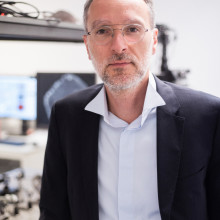
Dr. Giannis Zacharakis is a Research Director at the Institute of Electronic Structure and Laser – Foundation for Research and Technology (FORTH – IESL) and the Head of the Laboratory for Biophotonics and Molecular Imaging. He has served as the Vice President (2018 -2019) and President (2019-2020) of the European Society for Molecular Imaging (ESMI) and he has served two terms as a Member of the Council of the same Society (2014-2018). He is also the elected vice-president of the board of researchers at FORTH. He received his BSc in Physics in 1997 and his PhD in Biomedical Imaging in 2002 from the University of Crete. During 2003 and 2004 he has been a Research Fellow in Radiology at Harvard University, Cambridge MA USA. Between 2005 and 2009 he has been a Research Associate at FORTH-IESL and was promoted to Research Scientist between 2009 and 2016. In 2017 he was elected in his current position. His main fields of interest are Biophotonics, Biomedical and Optical Imaging focusing on developing novel tools and key enabling technologies for imaging biological processes in living systems, ranging from cells to organs to whole organisms. He is active on both applied and fundamental research on novel photonic devises, concepts and new theory development and has developed technologies for three-dimensional, tomographic imaging in model organisms and novel optical and optoacoustic microscopic techniques to extend imaging capabilities to unprecedented depths in opaque media. He has 63 publications in international peer-reviewed journals, 48 articles in peer-reviewed conference proceedings, 2 book chapters, 1 editorial article and 2 patents, as well as over 1700 citations (h-index: 19, Google Scholar). He has more than 50 presentations in international conferences, where he has been awarded 3 first prizes and has been invited more than 20 times in international conferences, schools and meetings.
Education
- 2002, PhD, Biomedical Imaging, University of Crete
- 1997, BSc Physics, University of Crete


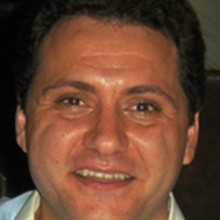
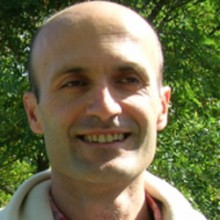
George D.Tsibidis is a Research Scientist at the Institute of Electronic Structure and
Laser at FORTH. He received his PhD in Theoretical High Energy Physics at the
University of Sussex in 1997. In 2017 he visited University of Lyon, Laboratoire
Hubert Curien, University of Saint Monnet, Saint-Etienne, France, as a Visiting
Professor. His interests include theoretical approaches related to ultrafast laser
interaction with materials and laser processing. He has been the author of numerous
peer-reviewed scientific papers on laser-matter interaction. He has been invited to a
large number of international conferences on laser-matter interaction and he has
participated in many competitive research projects.
Education
- 1997, Ph. D. Physics Department, University of Sussex, UK.
- 1993, Master of Science, Physics Department, University of Pennsylvania, PA, USA.
- 1990, Bachelor, Department of Physics, University of Athens, Greece.
Career
- 4/2004-Today, Research Associate, Institute of Electronic Structure and Laser, Foundation for Research and Technology – Hellas, Heraklion, Greece.
- 31/8/2017-1/10/2017, Visiting Professor, University of Lyon, Laboratoire Hubert Curien, University of Saint Monnet, Saint-Etienne, France.
- 10/2000 - 12/2002, Postdoctoral Research Fellow in the Mathematics Institute, University of Warwick, UK.
- 1//2000-10/2000, Postdoctoral Research Fellow in the School of Electrical Engineering, University of Birmingham, UK.
Interests
- Theoretical modelling and simulation of the interaction of pulsed lasers with semiconducting, metallic and dielectric surfaces (fundamental physical mechanisms),
- Theoretical investigation of the formation of nano/micro-sized structures on solids after irradiation with pulsed laser sources-craters, ripples, grooves,
- Theoretical investigation of local nano-heating and substrate modification based on enhanced absorption and near-field properties of metallic nanoparticles,
- Fluid dynamics modelling to explain surface modification effects,
- Exploration of stress/strain generation and thermomechanical effects,
- Electromagnetic wave propagation inside solids (Finite Difference Time Domain techniques),
- Elaboration of conditions that induce thermo-elastic-plastic effects on thin and bulky semiconducting and metallic surfaces,
- Simulations and modelling in optical fibres (use of Finite Difference Time Domain methods, CUDOS, etc).
- Applications of reaction-diffusion equations to model and simulate various physical processes
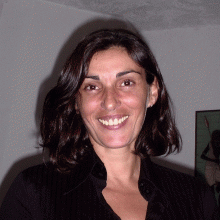
Studied Optical Holography at the Royal College Art in London (RCA, Royal) in the interdisciplinary department with the Imperial College of Science Technology Medicine (ICSTM, Imperial) and V&A Museum; with European and British scholarships. Master of Science at the National Technical University of Athens (NTUA) and PhD in Applied Science from the University of Sunderland, UK. She has been working since May 1996 as expert research staff at IESL /FORTH. She has brought to IESL the new structural diagnosis activity of Holography and Holographic Interferometry in Cultural heritage research and, through intensive personal work, soon developed with own competitively won funding the Applied Holography Metrology laboratory with which she claimed an active role in shaping new diagnostic technologies in investigation and control procedures in the documentation of movable and immovable CH with laser techniques. She has envisioned, networked, authored and competitively won major European projects that she has coordinated as project coordinator and also as co-coordinator /work package leader European projects from FP4-FP7. At the same time, she has won several international and European /Bilateral/ transnational R&D partnerships as well as Greek competing programs PAVET and PENED. She has been offering her services for years in EC as project evaluator. Author and co-author of scientific publications in journals, books, conference volumes, educational seminars, videos, CDs, etc. Scientific member of optical engineers and cultural scientific communities and organization committee member at international conferences
Education
- 2014, PhD, Applied Science, UoS, Univ. Sunderland, UK
- 2009, MSc, Chem. Eng. Material Science, NTUA, Univ. Athens, GR
- 1996, MPhil/DPhil, Conservation Science, RCA/ICSTM/V&A, Univ. London, UK
- 1992, PeD, Optical Holography, RCA, Univ. London, UK
- 1990, BSc, Optics, NTIA Univ. Athens, GR
Interests
- Optical Metrology
- Coherent Metrology
- Holography
- Interferometry
- Speckle Interferometry
- Laser interferometry
- Structural diagnosis
- Artworks
- Defect
- Cultural Heritage
Other
Main Activity
Establisher and head of Holography laboratory and project coordinator at IESL. Research activities range from Holography and Holographic Interferometry (HI) techniques and methodologies for the investigation of artworks; the applications of HINDT for detection, identification and evaluation of structural condition; HI as antifraud technology; physicomechanical deterioration mechanisms; environmental and transportation impact; laser ablation and photomechanical effects; optical prototype system design; experimental verification; on-field campaigns & methodology planning; innovation and research project development.
Funding
European Union
|
2016-20 |
E-RIHS, “The European Research Infrastructure for Heritage Science” (Horizon 2020-INFRADEV-2016-2, G. A. No739503, Local PI: D. Anglos (http://www.e-rihs.eu/) |
|
2015-18 |
LASERLAB-EUROPE IV, “Integrated European Laser Laboratories", H2020-INFRAIA-2014-15, Research and Innovation Action, Grant agreement No: 654148, Team Involvement: D. Anglos, P. Pouli, V. Tornari, G. Tserevelakis, K. Hatzigiannakis (https://www.laserlab-europe.eu/) |
|
2015-19 |
IPERION-CH, “Integrated Platform for the European Research Infrastructure ON Culture Heritage” (Horizon 2020 - INFRAIA-2014-2015, GA No 654028) Local PI: D. Anglos (http://www.iperionch.eu/) |
|
2009- 14 |
CHARISMA, “Cultural Heritage Advanced Research Infrastructures: Synergy for a Multidisciplinary Approach to Conservation/ Restoration” (INFRA-2008-1.1.1 Bottom-up approach-228330), Local PI: D. Anglos |
|
2011-14 |
SYDDARTA, “SYstem for Digitisation and Diagnosis in ART Applications” (FP7-ENV-2010-265151) Local PI: V. Tornari |
|
2009-13 |
CLIMATE FOR CULTURE, “Damage risk assessment, economic impact and mitigation strategies for sustainable preservation of cultural heritage in the times of climate change” (FP7-ENV-CP-226973) Local PI: V. Tornari (https://www.climateforculture.eu) |
|
2005-08 |
MultiEncode, “Multifunctional encoding system for assessment of movable Cultural Heritage” (SSPI-CT00-6427) Local PI: V. Tornari |
|
2003-06 |
LASERACT, “Laser multitask non-destructive technology in conservation diagnostic procedures” (ID: EVK4-CT-2002-00096) Local PI: V. Tornari (http://cordis.europa.eu/project/rcn/69585_en.html) |
|
2000-03 |
HOLOAUTHENTIC, “Holographic authenticity sensors” (G6RD-CT-1999-00145) Local PI: V. Tornari (https://cordis.europa.eu/project/rcn/51398/factsheet/en) |
|
1996-99 |
Laser ART, “Non-intrusive laser measurement techniques for diagnostics of the state of conservation of frescoes, paintings and wooden icons” (SMT4-CT96-2062 ) Local PI: V. Tornari |
National
|
2017-19 |
HELLAS-CH, “Synergy ELI - LASERLAB Europe, HiPER & E-RIHS.gr”, (MIS 5002735) Major project on the National Research Infrastructures Roadmap. Co-ordinator: Prof. D. Charalambidis (FORTH), Team involvement: P. Pouli, D. Anglos |
|
2003-06 |
OLOTEC, “Holographic method and system development for structural assessment of artworks” (GSRT) |
|
2003-04 |
“CULTURE 2000”, (CLT 2003-A11-RO-515) |
|
1995-98 |
LATECA “Laser technology in conservation of artworks” (GSRT ) |
