UV-Vis measurements

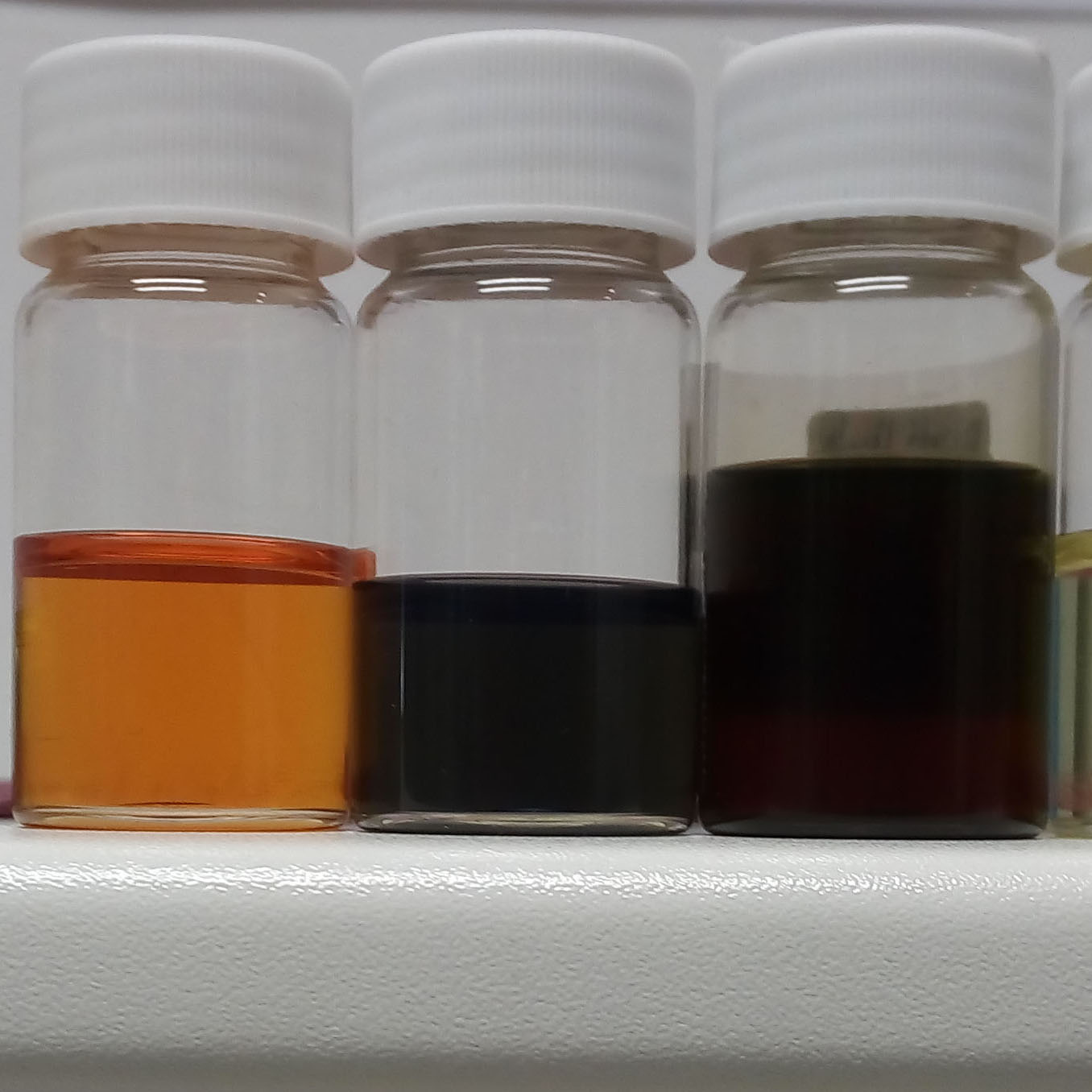
Our BIOBASE BK-D590 Double Beam Scanning UV/VIS Spectrophotometer, gives us the possibility to characterize several solid or liquid samples in absorption, transmission, or reflection mode, covering a spectral range of 190-1100nm, using a 1200 lines/mm grating.

English

Mechanical properties’ Measurements

We have the possibility to measure the mechanical properties of several samples using a BIOBASE BKWW-5S universal testing machine, suitable for tension / compression and flexural tests, using standardized grips.

The BIOBASE BKWW-5S universal testing setup is applicable for a wide range of materials for tension, compression, bending, shearing and low cycle test. Moreover, BKWW-5S is suitable for metal, rubber, plastic, spring, textile, and components testing, following ASTM, ISO, DIN, GB and other international standards.

English
AVH INSTITUTIONAL PARTNERSHIP
Simulating strongly-correlated many-body physics of open quantum systems with Rydberg atoms
Start Date: 01/09/2017,     End Date: 31/12/2021

Alexander von Humboldt Institutional Partnership Project between the Theoretical Quantum Optics and Technology Group of IESL-FORTH (D. Petrosyan) and the Theoretical Quantum Optics Group of University of Kaiserslautern (M. Fleischhauer).

Principal Investigator
Dr. Petrosyan David
Research Director

Scientific Staff

Dr. Nikolopoulos Georgios
Research Director
SCIENTIFIC PROJECT MANAGER POSITION IN THE PROJECT ARCHERS
The deadline to apply for this position has expired.
Publication Date
09/05/2019
Application Deadline
24/05/2019
Position Category
Reference Number
2019_7617
Salary
Location
Herakleion, Crete, Greece
Contact Person
Start Date
01/09/2019

Position Description

Project administration and management, press release and newsletter editing and workshop organization of the project ARCHERS. The ideal candidate should have good scientific qualifications in order to successfully follow the progress of the project, proven organizational skills and experience in project management

Related Project

ARCHERS -

Required Qualifications

  • BSc degree in Sciences (Physics, Chemistry, Materials Science or Engineering)
  • Working experience in a research environment
  • Working experience as a project administrator
  • Experience in planning and execution of a project
  • Business management skills and experience in budgeting and analysis
  • English language

Desirable Qualifications

  • Experience in scientific Laboratory
  • Laboratory management experience especially in multinational environment
  • Quality system management
  • Additional languages

Application Procedure

In order to be considered, the application must include:
- Completed application Form (Download link to the left)
- Brief CV
- Scanned copies of academic titles
- Reference letters (if required)
- All required forms and documents as layed out in each Job opening description

Please send your application and all documents to: hr@iesl.forth.gr and cc the Scientific supervisor marked in the left column

Appointment Duration

12 months

Funding

Multispectral Imaging Measurements

We have the possibility to implement quantitative detection and mapping of chemical characteristics through spectral imaging using an XPECAM X01 Multispectral imaging system, equipped with a CMOS Monochrome sensor, covering 30 spectral bands, operating from 350 - 1200 nm, with a spatial resolution of 5M pixels. 

English

Horiba LabRAM HR Evolution Raman microspectrometer

A Horiba LabRAM HR Evolution Raman microspectrometer (30 - 4000 cm-1), with open space microscope, offering a large free space under the objective turret. Thus, we can use large sample holders like cryostats, high temperature cells, high pressure cells, or just large samples. In order to get high stability, the sample stage is hard coupled to the LabRAM HR, while focusing is achieved by adjusting the height of the microscope objectives instead of the sample stage. This microscope offers all the functions of the standard microscope.

English

Bruker Vertex 70v FT-IR spectrometer attached to a Bruker HYPERION 2000 FT-IR microscope

A Bruker Vertex 70v FT-IR spectrometer attached to a Bruker HYPERION 2000 FT-IR microscope allows us to perform Transmission/Reflection/Absorption measurements in a spectral range of 24000 - 10cm-1 (0.3-720THz), covering a wide frequency range from far IR to visible regime.

English
ΜΙΑ (1) ΘΕΣΗ ΤΕΧΝΙΚΟΥ ΣΤΟ ΠΡΟΓΡΑΜΜΑ SMARTINSOLE
The deadline to apply for this position has expired.
Publication Date
08/05/2019
Application Deadline
07/06/2019
Position Category
Reference Number
2019_7546
Salary
Location
Herakleion, Crete, Greece
Contact Person
Start Date
01/07/2019

Position Description

Ανάπτυξη ηλεκτρικής διασύνδεσης μεταξύ πιεζοηλεκτρικής κυψέλης και μετρητικού πίεσης

Για το πλήρες κείμενο της πρόσκλησης ακολουθήστε τον σύνδεσμο "Related Documents", αριστερά

Required Qualifications

  • Πτυχίο Φυσικής ή Επιστήμης Υλικών ή Ηλεκτρονικής ή Ηλεκτρολόγου Μηχανικού
  • Μεταπτυχιακός τίτλος σε Φυσικές ή Τεχνολογικές επιστήμες
  • Γλώσσα προγραμματισμού και 3D CAD  
  • Γνώσεις σε αναλογικά/ ψηφιακά ηλεκτρονικά και κυκλώματα
  • Άριστη Γνώση Αγγλικών  

Application Procedure

Στο φάκελο υποβολής της πρότασης θα πρέπει να εμπεριέχονται τα ακόλουθα:

  • Αίτηση (Form Greek στη στήλη αριστερά) με αναφορά στον κωδικό της θέσης και στο όνομα του προγράμματος
  • Αναλυτικό Βιογραφικό Σημείωμα
  • Ευκρινή φωτοαντίγραφα τίτλων σπουδών

Appointment Duration

6 μήνες


The objectives of the group are:

  • Photoscience applications – Photonics in Agrofoods and Environment

We apply our know-how from the basic research studies for investigations in several applied fields such as:

  • Mass spectrometry in combination with laser induced break down spectroscopy (LIBS) for the analysis of the composition and structure of cultural heritage materials  (in collaboration with the group working in the cultural heritage projects).

  • Nanostructured materials produced by laser ablation in liquids in conjugation with biomolecules.

  • Uv-Vis and fluorescence spectroscopy to control the quality and the origin of agrofoods.

  • Laser spectroscopy for environmental studies aiming in detecting traces of greenhouse gases in the environment due to agricultural applications.


Research Topics

The research targets the understanding of  the formation mechanisms, the stability, the structure (geometric and/or electronic) and the properties (optical activity, chemical reactivity, catalytic activity) of clusters and free biomolecules and also the study of nanostructured materials made out of clusters.

At the Photonics for Agrofoods and Environment laboratory, we employ an alternative approach for the quick monitoring of the characteristic substances contained in food samples, with little or no processing. 

We rely on our expertise in the area of the interaction of light with matter and the development of specialized optical spectroscopic analysis methods (such as light absorption and fluorescence techniques). This way, we can record the optical spectrum that is the characteristic "fingerprint" and reflects the chemical composition of a sample. Different samples have a different fingerprint and the detected differences or similarities are used for:

  • identification,
  • origin and quality control

We focus on spectroscopic methods such as UltraViolet/Visible, Near Infrared, Fourier Transform Infrared (FTIR), Fluorescence, Laser induced Fluorescence (LIF), Time Resolved Florescence, Raman and Laser Induced Break Down Spectroscopy (LIBS). These techniques are quick and much "cheaper" than the time-consuming and costly conventional analytical techniques.

Our technology is used for:

  • Distinction of varieties of several agrofoods products (wine, oil, honey, milk, etc.)
  • Monitoring of wine maturation in relation to time and kind of barrel
  • Quality control of products
  • Detection of adulteration
  • Application of laser spectroscopic techniques for the detection of specific chemical substances in foods (contaminants, plasticizers, pesticides ...)
  • Creation of a database for the prominence of local varieties and the characterization of their geographical origin

Application of innovative optical methods to improve the quality of Greek wine through monitoring and control of winemaking parameters.
Development of an optical spectroscopy system prototype for fuel adulteration detection
Innovative technologies for climate change mitigation by Mediterranean agricultural sector
Quality and authenticity of the end products of olives (Edible olives– olive oil)
Development of rapid methods for checking the safety, quality and identity of dairy products in Crete
Protection and promotion of the quality of virgin olive oil, through the development and use of innovative methods for detection of contamination
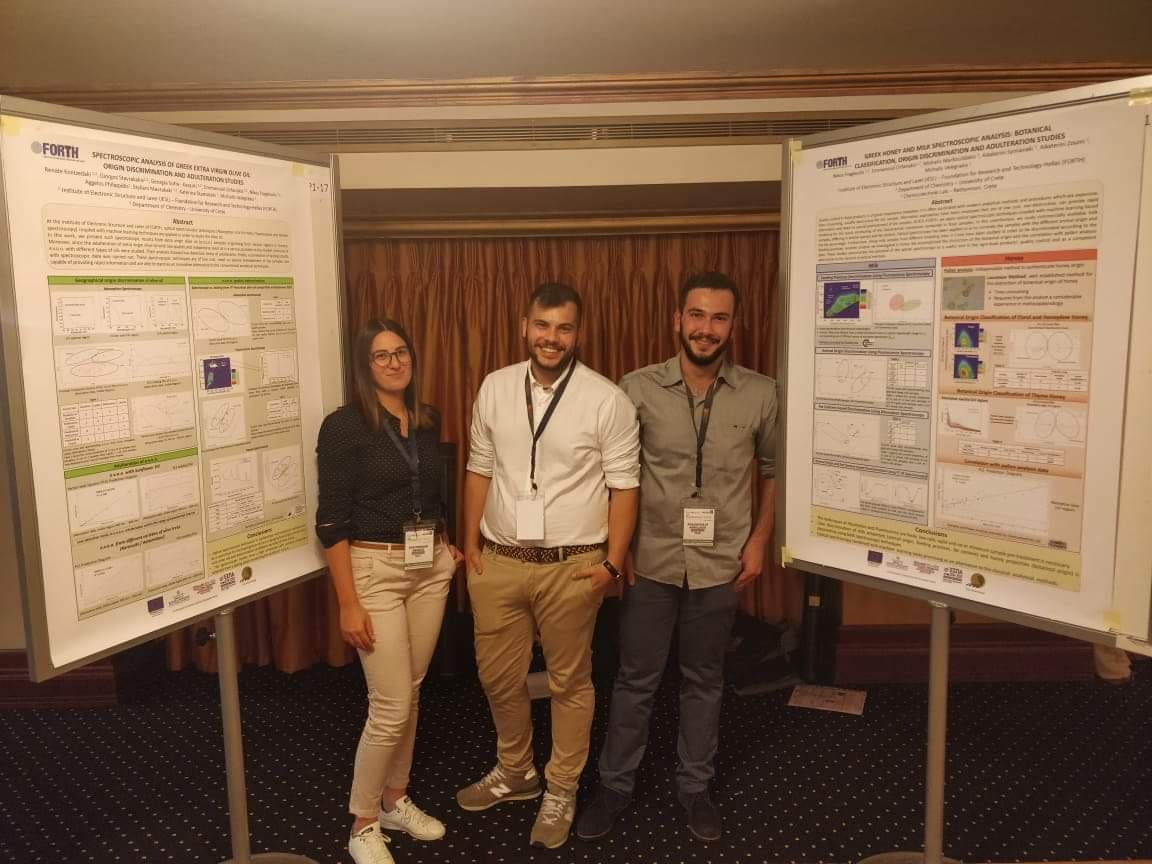
Comparative study using classical chemical analytical techniques, combined with innovative spectroscopic methods based on photonics and machine learning for the authenticity and origin detection of Greek honey
Characterization of Greek Wines by Ultraviolet–Visible Absorption Spectroscopy and Statistical Multivariate Methods
Aggelos Philippidis, Emmanouil Poulakis, Marianthi Basalekou, Argiro Strataridaki, Stamatina Kallithraka & Michalis Velegrakis
Analytical Letters, Volume:50, Issue:12, Page:1950-1963, Year:2017, DOI: doi.org/10.1080/00032719.2016.1255748
Comparative Study using Raman and Visible Spectroscopy of Cretan Extra Virgin Olive Oil Adulteration with Sunflower Oil
Aggelos Philippidis, Emmanouil Poulakis, Antigoni Papadaki & Michalis Velegrakis
Analytical Letters, Volume:50, Issue:7, Page:1182-1195, Year:2017, DOI:doi.org/10.1080/00032719.2016.1208212
Verifying the Geographical Origin and Authenticity of Greek Olive Oils by Means of Optical Spectroscopy and Multivariate Analysis
Renate Kontzedaki, Emmanouil Orfanakis, Georgia Sofra-Karanti, Katerina Stamataki, Aggelos Philippidis, Aikaterini Zoumi, Michalis Velegrakis
Molecules, Volume:25, Issue:4180, Page:doi:10.3390/molecules25184180, Year:2020, DOI:doi:10.3390/molecules25184180
Application of Ultraviolet-Visible Absorption Spectroscopy with Machine Learning Techniques for the Classification of Cretan Wines
Aggelos Philippidis, Emmanouil Poulakis, Renate Kontzedaki, Emmanouil Orfanakis, Aikaterini Symianaki, Aikaterini Zoumi, Michalis Velegrakis
Foods, Volume:10, Issue:9, Page:https://dx.doi.org/10.3390/ foods10010009, Year:2021, DOI:https://dx.doi.org/10.3390/ foods10010009
Optical spectroscopy methods combined with multivariate statistical analysis for the classification of Cretan thyme, multi-floral and honeydew honey
Emmanouil Orfanakis,Michail Markoulidakis,Aggelos Philippidis, Aikaterini Zoumi,Michalis Velegrakis
JSFA, Volume:published online, Page:DOI 10.1002/jsfa.11182, Year:2021, DOI:https://doi.org/10.1002/jsfa.11182

Heads

Dr. Velegrakis Michalis
Researcher Emeritus
Dr. Samartzis Petros
Principal Researcher

Technical Staff

Ms. Stamataki Katerina
Technician
Mr. Lamprakis Yannis
Technical Scientist

Research Associates

Dr. Philippidis Aggelos
PostDoctoral Fellow
Dr. Siozos Panagiotis
PostDoctoral Fellow

Students

Mr. Stavrakakis Georgios
Ph.D. student

Alumni

Ms. Kontzedaki Renate
Ph.D. student
Mr. Orfanakis Emmanouil
Ph.D. student
Ms. Boumpoulaki Evangelia
Alumni
Ms. Zakaki Evangelia
Alumni
Mr. Fragkoulis Nikolaos
Ph.D. student
Ms. Skarvelaki Konstantina
Alumni
Ms. Sofra-Karanti Georgia
Undergraduate trainee
Ms. Mavrakaki Styliani
Undergraduate trainee
Ms. Symianaki Aikaterini
Undergraduate trainee
Ms. Tylaki Georgia
Alumni
Mr. Poulakis Emmanouel
Alumni
Ms. Papadaki Antigoni
Alumni
Ms. Karagiannaki Ioulia
Alumni
Mr. Psyllakis Giannis
Alumni

Pages