

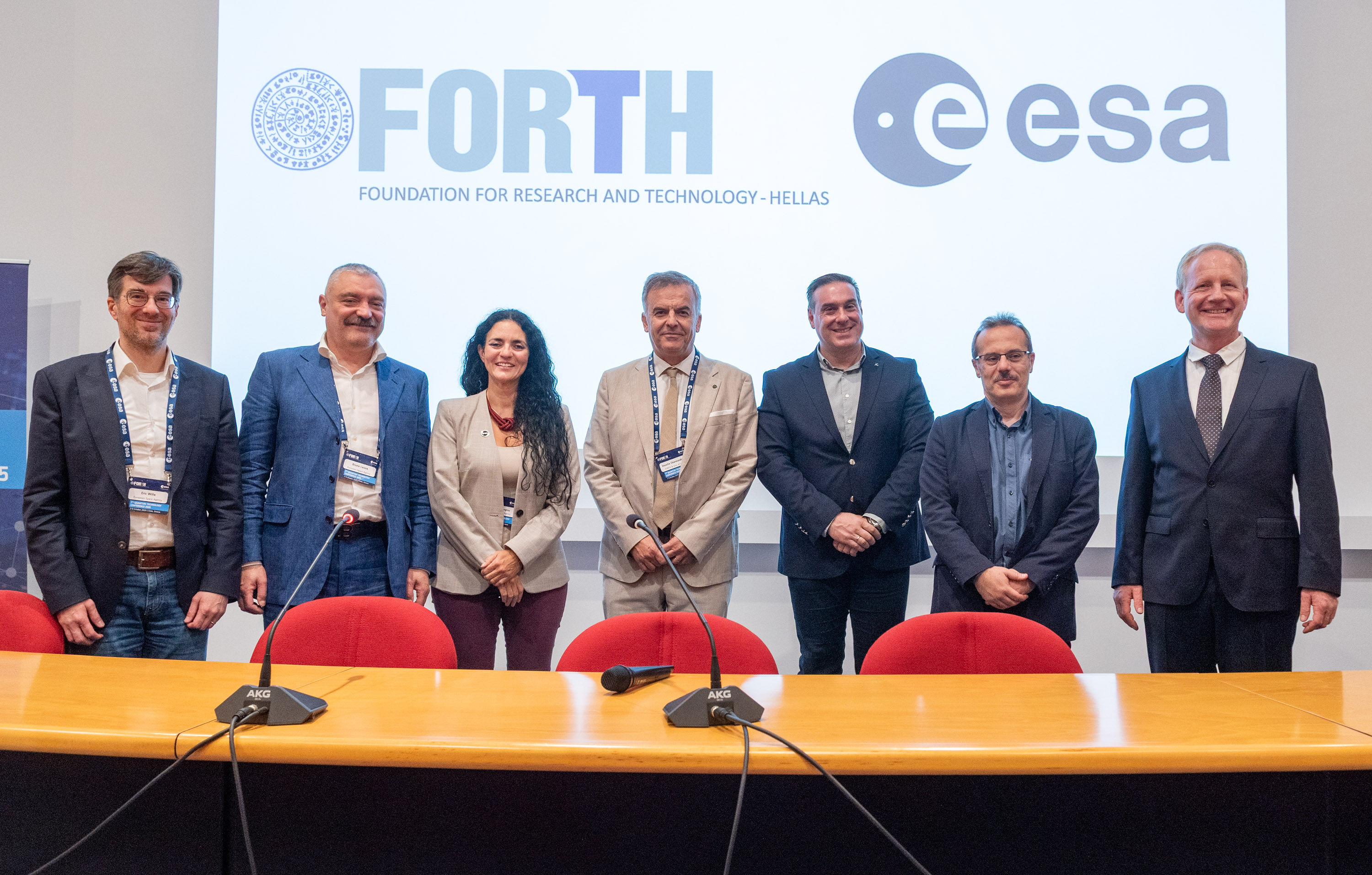
The Foundation for Research and Technology – Hellas (FORTH) proudly co-hosted the 7th International Quantum Technology Conference of the European Space Agency (ESA), held from October 7 to 9, 2025, at FORTH’s premises in Heraklion, Crete. This prestigious biennial event, considered a landmark in the field of quantum technologies for space applications, took place in Greece for the very first time.
The conference brings together leading experts and scientists from across Europe to explore the latest advances in quantum research and innovation. Each edition is hosted in a different European city, aiming to foster collaboration, showcase breakthroughs, and promote scientific excellence in the rapidly evolving domain of quantum technologies.
This year’s event focused on quantum technology applications in space, placing particular emphasis on new initiatives and international collaborations, goals of the quantum research community, emerging strategic challenges, technical advancements and breakthroughs, and opportunities for both commercial and institutional growth. The conference kicked off with welcome addresses from distinguished speakers: Dr. Josef Aschbacher, ESA Director General, Dr. Kyriaki Minoglou, Head of the Optics, Robotics & Life Sciences Division of ESA, and Prof. Vassilis Charmandaris, President of FORTH. The program featured eight keynote presentations by internationally renowned speakers from top universities and research centers, as well as over 150 participants from around the world.
In addition to the main sessions, the conference included guided tours of FORTH’s cutting-edge research laboratories at ICS, IA, and the Institute of Electronic Structure and Laser (IESL). IESL plays a crucial role in advancing the fundamental understanding of quantum physics and laser technologies that underpin quantum science. Its expertise bridges the gap between theoretical physics and practical quantum applications, particularly relevant to space technologies. Participants also visited the Skinakas Observatory in Anogeia, offering an immersive experience in both theoretical and applied quantum science.
ESA and FORTH: Advancing Quantum Research Through Strategic Collaboration
ESA, established in 1975 and comprising 23 member states, is dedicated to the peaceful exploration of space for the benefit of humanity. Through a robust network of specialized researchers, ESA coordinates space-related activities across Europe.
FORTH has established itself as a pivotal bridge between academic research and practical technological applications. With significant expertise in quantum sensors, optical systems, photonics, and computational technologies, FORTH has built a strong reputation for driving innovation. Its selection by ESA as co-organizer of this year's conference reflects its international standing and the critical role it plays in advancing technologies that are shaping the future of space exploration.
A major milestone of the event was the signing of a Memorandum of Intent (MoI) on Thursday, October 9, between FORTH and ESA. This agreement reinforces their shared commitment to deepening scientific and technological cooperation in areas such as quantum technologies, computing, astronomy, and astrophysics.
The MoI was signed by Prof. Vassilis Charmandaris, Chairman of the Board of Directors at FORTH, and Dr. Kyriaki Minoglou, Head of ESA’s Optics, Robotics & Life Sciences Division, on behalf of Dr. Dietmar Pilz, Director of Technology, Engineering & Quality at ESA.
The signing ceremony was attended by Dr. George Matalliotakis, Deputy Regional Governor for Liaison with Academic and Research Institutes, and Dr. Nikolaos Sergis, CEO of the Hellenic Space Center under the Ministry of Digital Governance. Both officials welcomed the initiative, expressing strong support and emphasizing the long-term strategic value of this collaboration for both scientific progress and national development.
A Path Forward for Innovation and Economic Growth
This agreement lays the foundation for dynamic joint ventures in space research and technology. It also signals new opportunities for Greece to position itself as a competitive force in the global quantum and space technology landscape. By strengthening the bridge between advanced research and its applications, the collaboration between ESA and FORTH is expected to not only foster innovation but also contribute significantly to the country’s economic and technological growth.
The 1st International Conference of the Panhellenic Optical Society (PHOS)
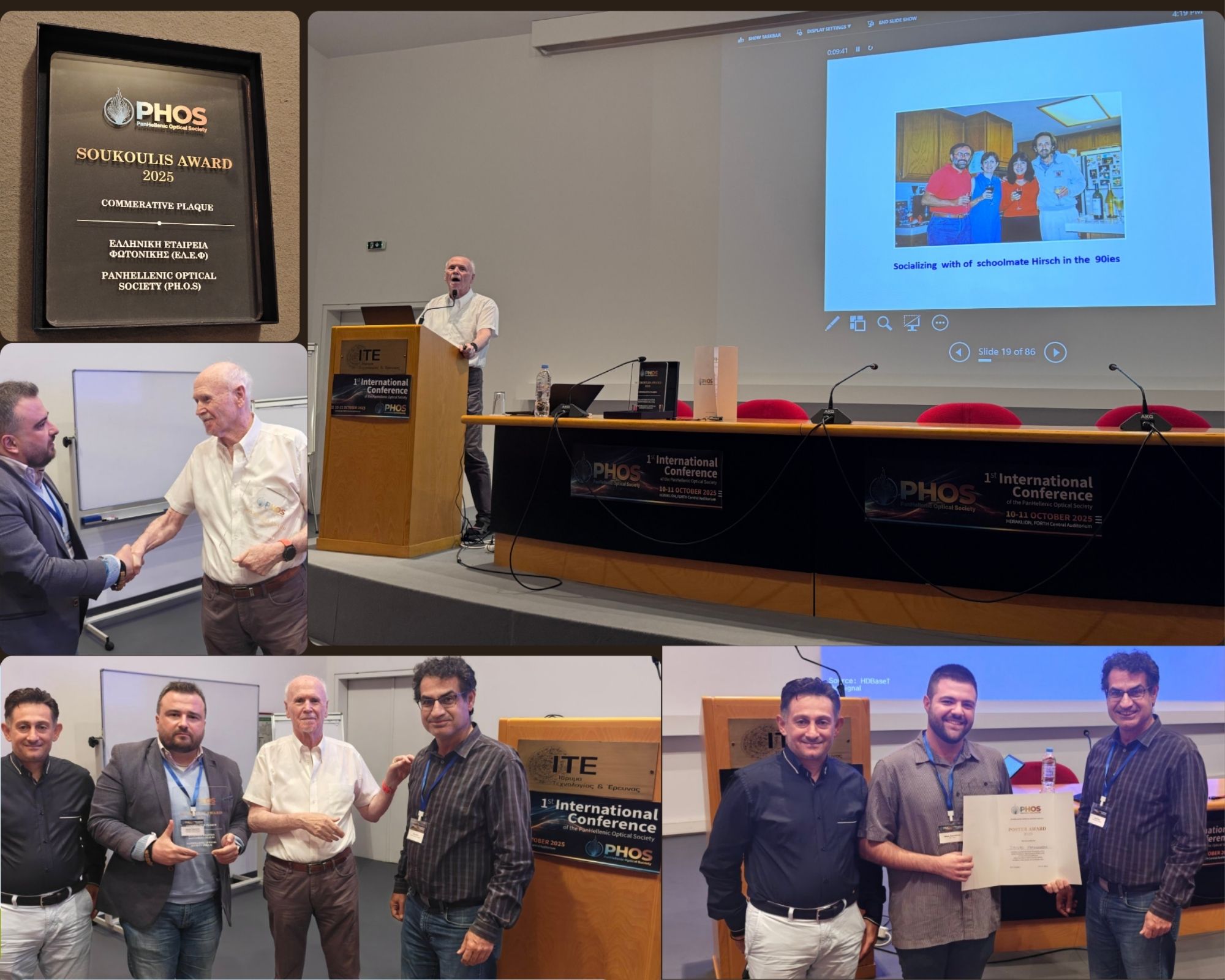
The 1st International Conference of the Panhellenic Optical Society (PHOS) was successfully held at FORTH, uniting leading scientists and emerging researchers from both Greece and around the world to delve into the latest advancements in photonics. The conference also marked the occasion of the Society’s inaugural General Assembly and Board Meeting.
At this landmark event, we had the great honor of welcoming Prof. Eleftherios Economou, Honorary President of FORTH, whose presence gave special significance to the conference. We warmly thank him for presenting the PHOS-Costas Soukoulis' Honorary Award to Prof. Kosmas Tsakmakidis, Assistant Professor at National and Kapodistrian University of Athens.
About Costas Soukoulis
Costas Soukoulis was an Associated Researcher at Institute of Electronic Structure and Laser (IESL) of Foundation for Research and Technology, Hellas (FORTH). He received his B.S. in Physics from Univ. of Athens in 1974. He obtained his doctoral degree in Physics from the Univ. of Chicago in 1978. From 1978 to 1981 he was visiting Assistant Professor at the Physics Dept. at Univ. of Virginia. He spent 3 years (1981-84) at Exxon Research and Engineering Co. and since 1984 has been at Iowa State Univ. (ISU) and Ames Laboratory. He has been an associated member of FORTH since 1983 and was a Professor (part time) at Dept. of Materials Science and Engineering at Univ. of Crete (2001-2011). He has courtesy appointments at the Departments of Materials Science and Engineering and Electrical and Computer Engineering at Iowa State University.
Prof. Soukoulis was Fellow of the American Physical Society, Optical Society of America, and American Association for the Advancement of Science. He received the ISU Outstanding Achievement in Research in 2001, and the senior Humboldt Research Award in 2002; He shared the Descartes award for collaborative research on left-handed materials in 2005; He won the 2014 Max Born Award of the Optical Society Of America. Prof. Soukoulis has been also a member or a chairman of various International Scientific Committees responsible for various International Conferences.
The Costas Soukoulis Honorary Award
In recognition of his lasting impact on photonics, the Soukoulis’ Honorary Award was established to honor outstanding young researchers who have made significant contributions to the field of Photonics. The award is presented by the newly established PanHellenic Optical Society (Greek Society for Photonics).
We would like to congratulate Prof. Kosmas Tsakmakidis on receiving this prestigious award, in recognition of his remarkable achievements and valuable contributions to the field of photonics. We also wish to extend our sincere gratitude to Prof. Eleftherios Economou for his heartfelt tribute to Costas Soukoulis, for announcing both the Costas Soukoulis Award and the Best Poster Award, and for his lifelong dedication to advancing Greek science and research.
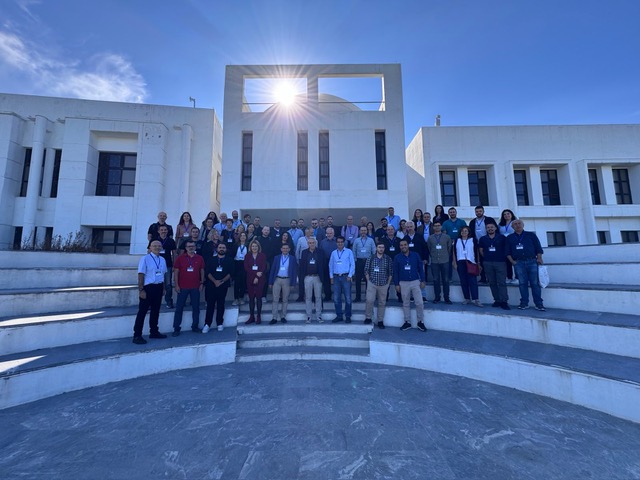
The 1st International Conference of the Panhellenic Optical Society (PHOS) successfully concluded at FORTH, bringing together distinguished scientists and young researchers from Greece and abroad to explore new frontiers in photonics.
Heartfelt thanks to all speakers and participants for their inspiring presentations and valuable contributions, and to Prof. Nikos Pleros and Dr. Emmanuel Stratakis for their co-organization and vision that made this event possible.The conference also marked the foundation of the Panhellenic Optical Society (PHOS) — a new institution aiming to unite and strengthen the Greek scientific community in the field of photonics.
It was a great honor to welcome Prof. Eleftherios Economou, whose presence gave special significance to the conference. We warmly thank him for his lifelong contribution to Greek science and research.
Grateful to everyone who contributed to making PHOS 2025 a meaningful milestone for the progress of photonics in our country.
More information: https://phos.iesl.forth.gr/
ΠΡΟΚΗΡΥΞΗ ΔΙΕΝΕΡΓΕΙΑΣ ΕΚΛΟΓΩΝ
ΓΙΑ ΤΗΝ ΑΝΑΔΕΙΞΗ ΕΡΕΥΝΗΤΩΝ – ΜΕΛΩΝ ΤΗΣ ΕΙΔΙΚΗΣ ΕΠΙΤΡΟΠΗΣ ΚΡΙΤΩΝ
ΓΙΑ ΤΗΝ ΕΠΙΛΟΓΗ ΤΟΥ ΔΙΕΥΘΥΝΤΗ
ΤΟΥ ΙΝΣΤΙΤΟΥΤΟΥ ΗΛΕΚΤΡΟΝΙΚΗΣ ΔΟΜΗΣ ΚΑΙ ΛΕΪΖΕΡ ΤΟΥ ΙΤΕ
Το Διοικητικό Συμβούλιο του Ιδρύματος Τεχνολογίας και Έρευνας κατόπιν του, με Α.Π. 69231/9-9-2025, εγγράφου της Γενικής Γραμματείας Έρευνας και Καινοτομίας, αποφασίζει με την υπ’ αριθμ. πρακτικού 567/46-7/19.9.2025 την διενέργεια εκλογών, με μυστική ψηφοφορία, για την ανάδειξη δύο (2) Ερευνητών - μελών της ειδικής επιτροπής κριτών για την επιλογή Διευθυντή του Ινστιτούτου Ηλεκτρονικής Δομής και Λέιζερ (ΙΗΔΛ) του ΙΤΕ, και των αναπληρωτών τους, σε εφαρμογή της παραγράφου 10 εδαφ. β του άρθρου 16 του ν. 4310/2014 όπως αυτό αντικαταστάθηκε και ισχύει με την παρ. 7 του άρθρου 14 του ν. 4386/2016.
Βάσει των παραπάνω, το Ινστιτούτο Ηλεκτρονικής Δομής και Λέιζερ του ΙΤΕ προκηρύσσει τις εκλογές για την 30η Σεπτεμβρίου 2025, ημέρα Τρίτη, από 9 π.μ. έως 3 μ.μ. Οι εκλογές θα διεξαχθούν ψηφιακά με το ηλεκτρονικό σύστημα ψηφοφορίας ΖΕΥΣ. Η διαδικασία θα επικουρείται τεχνικά από τον κ. Εμμανουήλ Γιατρομανωλάκη με αναπληρωτή χειριστή τον κ. Βασίλη Κιρκίνη (απόφαση ΔΣ/ΙΤΕ 567/46-7/19.9.2025)
Δικαίωμα του εκλέγειν έχει το σύνολο του ερευνητικού προσωπικού (Ερευνητές και ΕΛΕ ανεξαρτήτως βαθμίδας) του Ινστιτούτου.
Δικαίωμα του εκλέγεσθαι έχουν οι Ερευνητές Α’ βαθμίδας του Ινστιτούτου.
Ως προθεσμία υποβολής δηλώσεων όσων ΔΕΝ επιθυμούν να είναι υποψήφιοι ορίζεται η 26η Σεπτεμβρίου 2025, ημέρα Παρασκευή, και ώρα 3 μ.μ. Οι δηλώσεις απευθύνονται προς την εφορευτική επιτροπή και υποβάλλονται ηλεκτρονικά, στην ηλεκτρονική διεύθυνση efe@iesl.forth.gr.
Ο ορισμός της εφορευτικής επιτροπής διενέργειας των εκλογών, θα πραγματοποιηθεί με δημόσια κλήρωση με την οποία θα επιλεγούν τρία (3) τακτικά και τρία (3) αναπληρωματικά μέλη από το σύνολο των Ερευνητών και ΕΛΕ του Ινστιτούτου. Η κλήρωση θα διεξαχθεί στο γραφείο Γ206 (προϊσταμένη γραμματείας ΙΗΔΛ) στον 1ο όροφο του κεντρικού κτηρίου του ΙΤΕ, την Τετάρτη 24 Σεπτεμβρίου 2025 και ώρα 10 π.μ.
Ηράκλειο 23 Σεπτεμβρίου 2025
Για το Ινστιτούτο Ηλεκτρονικής Δομής και Λέιζερ του ΙΤΕ
Αλέξανδρος Λάππας
Διευθυντής Ερευνών
Η προκήρυξη διενεργείται από τον υπογράφοντα βάσει της υπ’ αριθμ. πρακτικού απόφαση ΔΣ/ΙΤΕ 567/46-7/19.9.25 επειδή ο Αναπλ. Διευθυντής του Ινστιτούτου κωλύεται (υποψήφιος για την προκηρυχθείσα θέση).
Άρθρο 14 παρ. 4 Ν. 4386/16 (τροποποίηση άρθρου 16, παρ. 7 Ν. 4314/14).
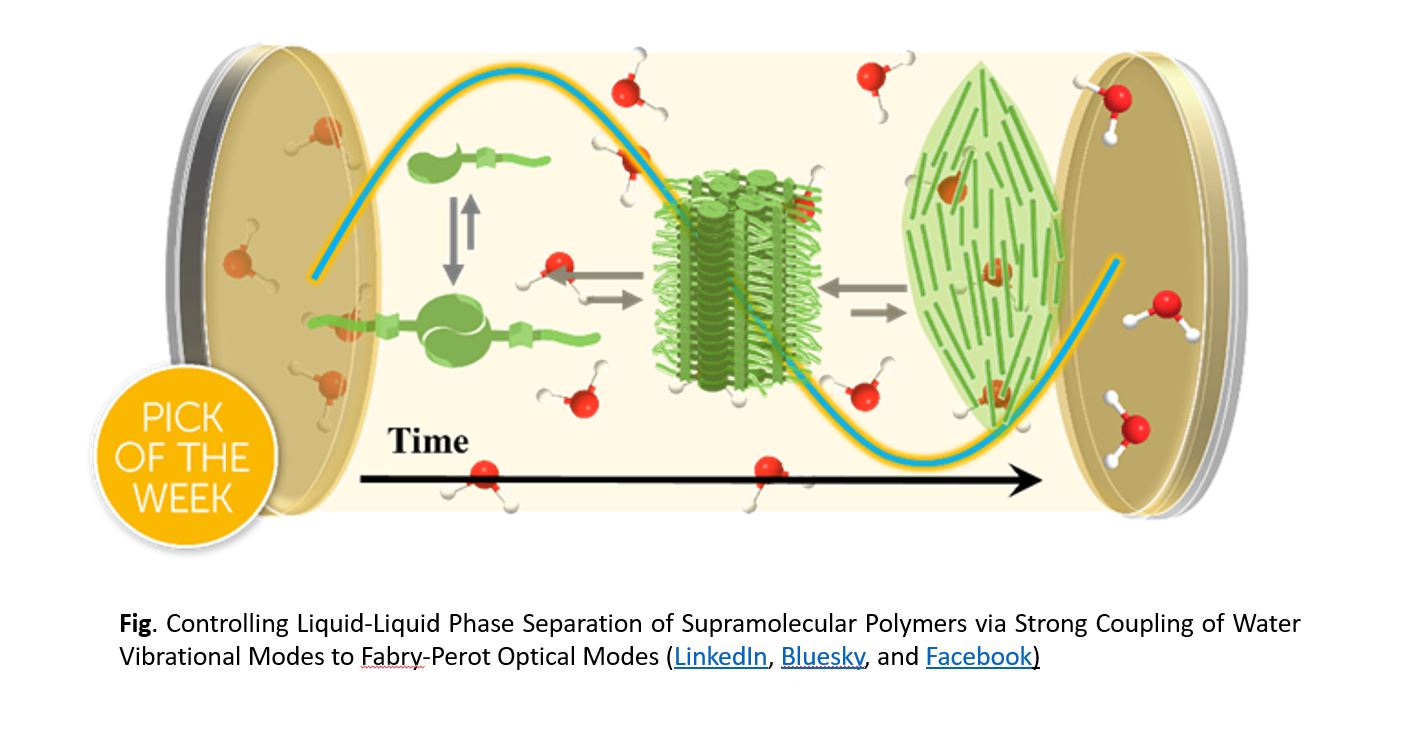
We are proud to announce that the research article entitled “Impact of vibrational strong coupling on liquid–liquid phase separation in supramolecular polymers”, published by the Institute of Electronic Structure and Laser, FO.R.T.H, in collaboration with the Institute for Complex Molecular Systems, Laboratory of Macromolecular and Organic Chemistry, Eindhoven University of Technology, the Department of Materials Science and Engineering, Department of Chemistry, Research Center for Industries of the Future, Westlake University, the Max Planck Institute for Polymer Research, the School of Material Science and Engineering, Zhejiang University, and the Faculty of Physics, Adam Mickiewicz University, Uniwersytetu Poznanskiego, has been selected as the Pick-of the week by the journal Chemical Science (The flagship journal of the Royal Society of Chemistry). Furthermore, the article has also been included in several prestigious themed collections: 15th Anniversary: Chemical Science community collection (2025) and Chemical Science HOT Article Collection (2025).
Summary
Most of us think of empty space as truly empty, but it is not. It’s buzzing with tiny, invisible energy ripples called vacuum fluctuations. These fluctuations are bursts where particles briefly pop in and out of existence. Trapping light in a special environment so that it strongly interacts with matter- known as ‘light-matter strong coupling’ - can reshape the way chemical reactions happen. Our study explores how this concept applies to liquid–liquid phase separation - a type of molecular “sorting” in which a solution splits into two distinct liquid phases. Last year, we discovered that the growth of supramolecular fibers can entropically trigger this separation. Now, we demonstrate that by placing this system in an optical cavity (Fig.), the light–matter strong coupling controls the process, without the addition of chemicals, real photons or changing temperature or pressure. It does this by changing the system’s energy landscape, making it harder for fibers to form. Our high-resolution microscopy images reveal that droplets (tactoids) appear more slowly in the cavity. In situ scattering experiments confirm that the reason is simple but powerful: the coupling itself suppresses fiber formation. This finding is more than a laboratory curiosity as it also tells us about strong coupling favoring of water clusters or oligomers instead of supramolecular polymerization. By demonstrating that light–matter strong coupling can steer self-assembly processes, we open the door to new ways of designing materials and medicines. Imagine smart biomaterials that respond to different resonant optical modes (even in ‘dark’) instead of chemical triggers, or therapies where delicate biological processes are controlled without invasive interventions.
MPIP researchers, Profs. George Fytas , Werner Steffen and Bert Meijer, in collaboration with Drs. K. Joseph and H. Fu of Prof. E.W. Meijer’s group in the Institute for Complex Molecular Systems, Eindhoven University of Technology, The Netherlands, demonstrate that light-matter strong coupling can reshape the energy landscape of supramolecular polymerization, thereby slowing down liquid-liquid phase separation in supramolecular fibrils.
Publication link: https://doi.org/10.1039/D5SC04149J
Prof. G. Fytas Group: https://sites.mpip-mainz.mpg.de/erc-smartphon
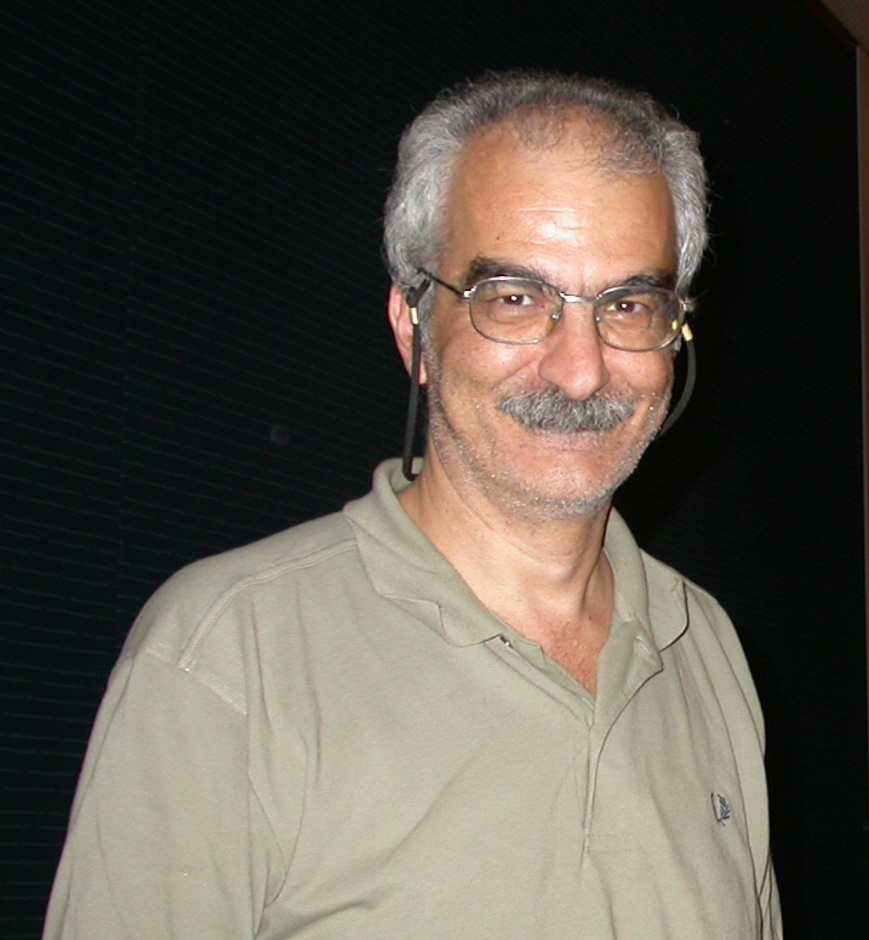
Σε κλίμα βαθιάς συγκίνησης, την Πέμπτη, 31 Ιουλίου 2025, πραγματοποιήθηκε μονοήμερη εκδήλωση μνήμης προς τιμήν του εξαίρετου και πολυαγαπημένου συναδέλφου και φίλου μας, Κώστα Καλπούζου (https://beaver.iesl.forth.gr/), κατόπιν πρότασης του Επιστημονικού Συμβουλίου.
Ο Κώστας Καλπούζος σπούδασε στο Πανεπιστήμιο του Τορόντο Καναδά, από όπου έλαβε πτυχίο BASc από το τμήμα Εφαρμοσμένης Επιστήμης και Μηχανικών το 1975, πτυχίο BSc από το τμήμα Χημείας το 1978, μεταπτυχιακό πτυχίο ΜSc από το τμήμα Χημείας το 1981 και Διδακτορικό τίτλο (PhD) από το τμήμα Φυσικής το 1987. Τα έτη 1988-1990 εργάστηκε ως επιστημονικός συνεργάτης του ίδιου Πανεπιστημίου και της εταιρίας M.P.B. Technologies Inc., με υποτροφία του National Research Council of Canada.
Το 1990 επέστρεψε στην Ελλάδα και έως το 1992 εργάστηκε ως συμβασιούχος διδάσκων στο τμήμα Φυσικής του Πανεπιστημίου Κρήτης. Επί σειρά ετών, συνέχισε να προσφέρει εθελοντικά διδακτικό έργο και συν-επίβλεψε μία διδακτορική διατριβή. Το 1993 προσελήφθη στο ΙΤΕ-ΙΗΔΛ. Το 1995 εξελέγη ως Ειδικός Λειτουργικός Επιστήμονας Β’ βαθμίδας και το 1999 προήχθη στην Α’ βαθμίδα. Το έργο του, μεταξύ άλλων, περιλάμβανε την ανάπτυξη συστήματος laser οργανικής χρωστικής υπερβραχέων παλμών καθώς και την εγκατάσταση και λειτουργία συστήματος ενισχυτή λέιζερ υπερβραχέων παλμών και σταθμού εργασίας pump-probe μετρήσεων υπερταχέων δυναμικών φαινομένων. Σε ερευνητικό επίπεδο, εργάστηκε σε θέματα υπερταχείας δυναμικής ηλεκτρονίων σε στερεά σώματα και νανοϋλικά, στη επεξεργασία και νανοδόμηση επιφανειών με laser και στην επιστήμη και τεχνολογία αττοδευτερολέπτων.
Ο Κώστας Καλπούζος υπήρξε ακούραστος σύμβουλος, καθοδηγητής και συμπαραστάτης για φοιτητές, μεταδιδακτορικούς, ερευνητές, μέλη ΔΕΠ και διοικητικά στελέχη. Διαδραμάτισε κεντρικό ρόλο σε διοικητικά θέματα του ΙΗΔΛ και στη διαμόρφωση και λειτουργία της ομάδας λέιζερ, ασκώντας στην πράξη καθήκοντα διευθύνοντος συμβούλου. Η συνολική συμβολή του στη διοικητική οργάνωση του ΙΗΔΛ υπήρξε καθοριστική καθώς με τη βαθιά επιστημονική του κατάρτιση και την αφοσίωση του, συνέβαλε ουσιαστικά στη διαμόρφωση της φυσιογνωμίας του ινστιτούτου, αφήνοντας ένα ανεξίτηλο αποτύπωμα στην πορεία του.
Η εκδήλωση πραγματοποιήθηκε στην αίθουσα “Κώστας Φωτάκης” στο κεντρικό κτίριο του ΙΤΕ στις Βούτες Ηρακλείου περιλάμβανε επιστημονικές ομιλίες και διηγήσεις προσωπικών αναμνήσεων από συνεργάτες και φίλους του Κώστα.
Flower-like ZnIn₂S₄/NiAl-LDH/Pt Heterostructures Boost Solar Hydrogen Production
Efficient, Stable, and Scalable Photocatalyst for Clean H₂ Evolution
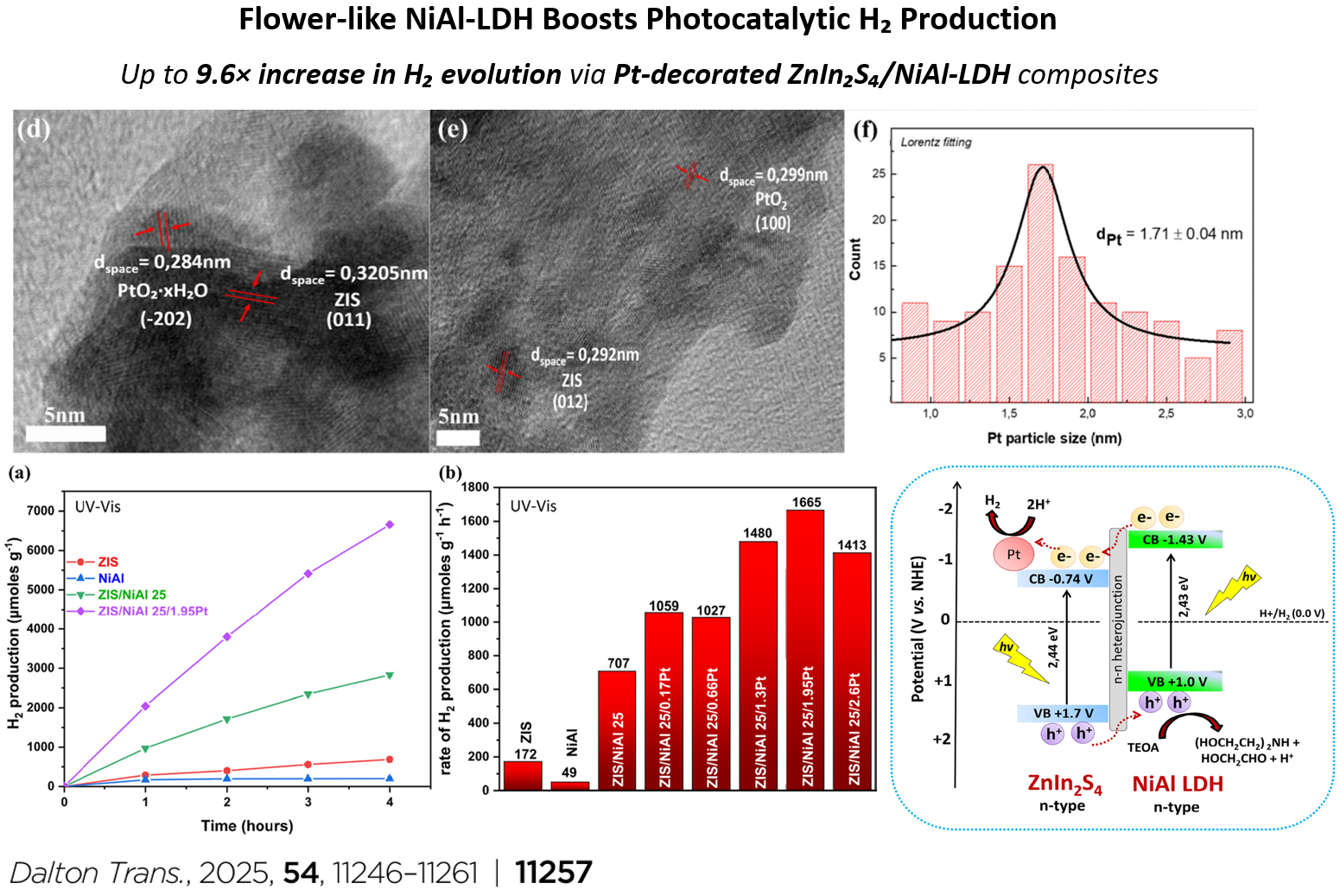
Researchers at the Institute of Electronic Structure and Laser (IESL–FORTH) and the Department of Environmental Technology, Faculty of Chemistry, University of Gdansk have developed a highly efficient photocatalyst based on ZnIn₂S₄ nanosheets integrated with 3D flower-like NiAl-layered double hydroxide (LDH) and decorated with platinum nanoparticles. This innovative heterostructure demonstrates exceptional performance in photocatalytic hydrogen production under UV-vis and visible light irradiation, providing a green and cost-effective method for solar-driven hydrogen generation.
Performance and Innovation
The catalyst, synthesized via in situ growth of NiAl-LDH microflowers followed by photodeposition of Pt, achieves hydrogen evolution rates up to 1665 μmol g⁻¹ h⁻¹, outperforming pristine ZnIn₂S₄ by nearly 10-fold. The optimized Pt content (1.95 wt%) acts as an active site and electron sink, improving charge separation and enhancing photocatalytic activity.
Experimental techniques, including XRD, HRTEM, PL, XPS, and photoelectrochemical measurements, confirm the formation of a stable and well-contacted heterojunction. A proposed type-II n–n heterojunction mechanism describes efficient charge transfer from NiAl-LDH to ZnIn₂S₄ and subsequent H⁺ reduction on Pt surfaces. The material also demonstrates excellent stability over multiple cycles, with minimal Pt leaching and superior structural resilience.
Future Impact
This research paves the way for the development of low-cost, high-performance photocatalysts using earth-abundant, lead-free materials for sustainable hydrogen production. The ZnIn₂S₄/NiAl/Pt composite holds great promise for applications in solar fuels, green energy technologies, and photocatalytic water splitting systems.
Research and Publication Details
This study was the result of an international collaboration between the Institute of Electronic Structure and Laser – FORTH (Greece), the University of Gdansk (Poland), the Gdansk University of Technology (Poland), and the Institute of Physical Chemistry – Polish Academy of Sciences (Poland).
This work was carried out by Anna Souri (first author), Maria Zografaki at the TCMD laboratory – IESL-FORTH, and Leila Zouridiunder the supervision of Prof. Vassilios Binas (TCMD laboratory – IESL-FORTH). Prof. Binas also holds a position at the Aristotle University of Thessaloniki.
The TCMD – IESL team collaborated closely with Tomasz Klimczuk (Gdansk University of Technology), Kostiantyn Nikiforow (Institute of Physical Chemistry – Polish Academy of Sciences), and Prof. Anna Malankowska (University of Gdansk), combining expertise in material synthesis, structure, and performance evaluation. The project was jointly supervised by Prof. Anna Malankowska and Prof. Vassilios Binas.
Corresponding author from IESL: Prof. Vassilios Binas
Read the full paper:
Dalton Transactions, 2025, 54, 11246–11261
https://doi.org/10.1039/d5dt01018g
Published: July 4, 2025
Journal:Dalton Transactions (RSC Publishing)
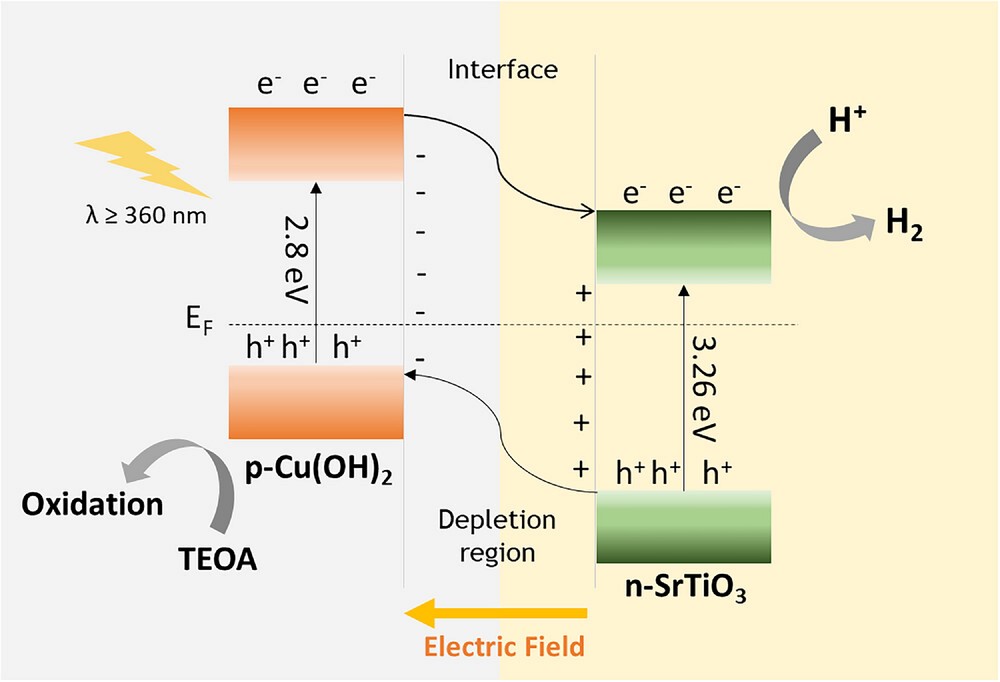
Researchers of Transparent and Conductive Materials and Devices Laboratory in IESL/FORTH have developed p-Cu(OH)2/n-SrTiO3 heterojunctions for efficient photocatalytic hydrogen production. According to available literature, this is the first study to utilize an STO catalyst decorated with Cu(OH)2 via a simple photodeposition method as a photocatalyst for hydrogen production under solar iradiation.
Photocatalytic activity and innovation
Flower-like SrTiO₃ photocatalysts decorated with different weight percentages of Cu(OH)₂ (0.1–5 wt.%) were synthesized via a simple solvothermal and photodeposition method. The optimized 1 wt.% Cu(OH)₂/STO exhibited the highest H₂ evolution rate (∼139 μmol h⁻¹; ∼6950 μmol g⁻¹ h⁻¹) under λ> 360 nm, along with excellent stability. The remarkable performance enhancement is attributed to the formation of a well-integrated p–n heterojunction at the Cu(OH)₂/STO interface, which facilitates efficient charge separation and transfer. This study highlights Cu(OH)₂/STO as an effective photocatalyst for hydrogen production and provides deeper insight into the complex charge-transfer dynamics at these interfaces.
Future impact
This work paves the way for developing highly efficient, stable, and scalable photocatalytic systems for sustainable hydrogen production.
Research and Publication Details
This research work was carried out as part of the postdoctoral research of Evangelia Skliri (first author), in collaboration with Anna P. Souri (PhD), Dr. Ioannis Vamvasakis, Dr. Evangelos Andreou, Prof. Gerasimos Armatas (Department of Materials Science and Engineering), and Prof. Vassilios Binas (Transparent and Conductive Materials and Devices Laboratory – IESL-FORTH; Chemistry Department, Aristotle University of Thessaloniki).
Corresponding authors from IESL: Dr. Evangelia Skliri and Prof. Vassilios Binas
For more details: https://doi.org/10.1002/adsu.202500127
Cs2AgBiBr6 Perovskites: Designing Stable, Sensitive and Selective Eco-friendly Ozone Sensors
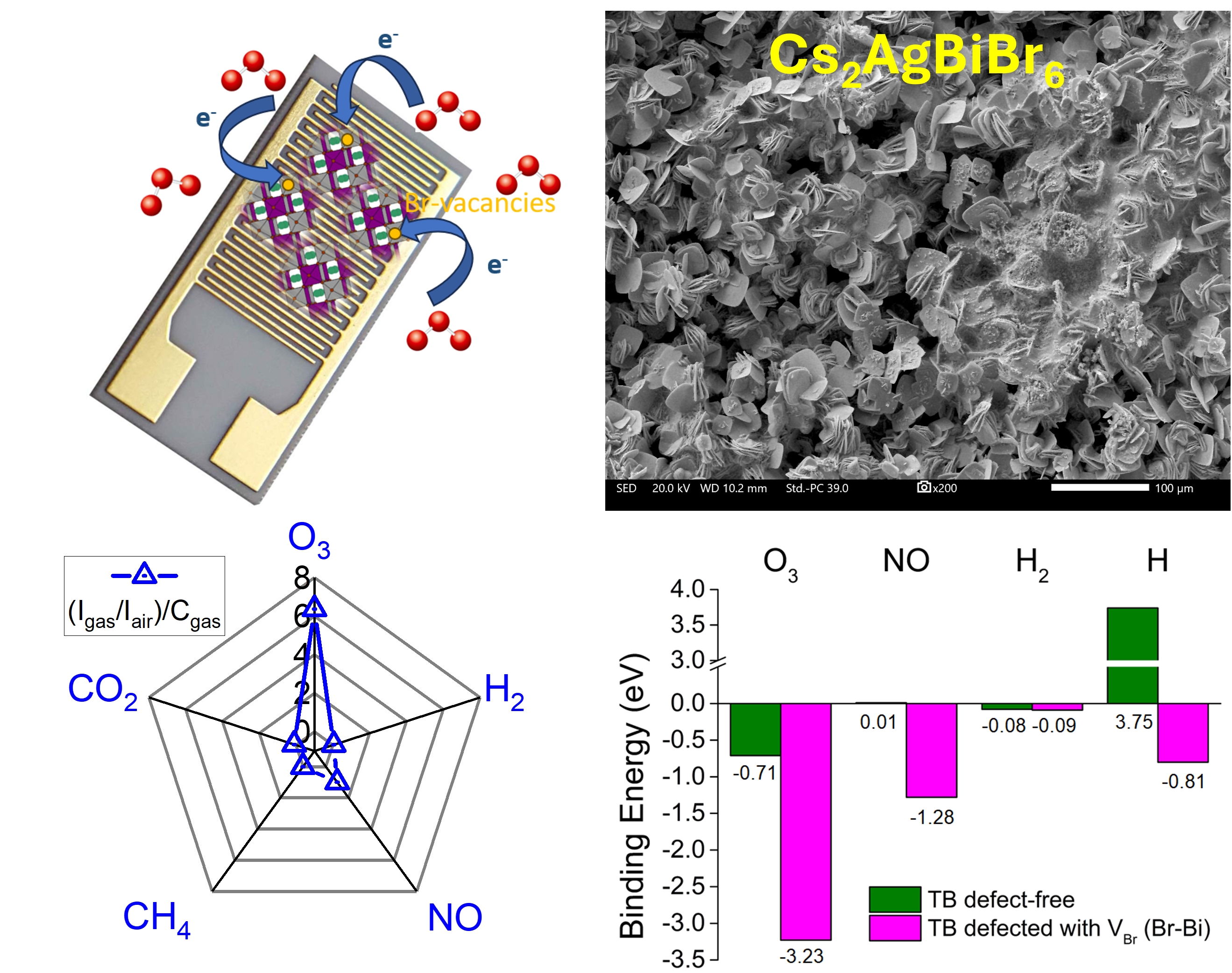
Researchers at the Institute of Electronic Structure and Laser (IESL) have developed a highly selective, eco-friendly ozone sensor, overcoming the critical challenges of selectivity and lead toxicity common in gas sensor technology. The breakthrough involves using lead-free double perovskites (Cs2AgBiBr6) as the ozone-sensing element, offering a "green" alternative to conventional sensors containing harmful lead.
Performance and Innovation
The new sensor operates efficiently at room temperature with minimal power consumption (0.1 V). It exhibits excellent sensitivity down to a few hundred ppb, a fast response time, and unprecedented selectivity for ozone over other common gases. The research, which merges experimental data with theoretical calculations, provides deep insights into the sensor's active sites and sensing mechanisms. It also highlights the device's remarkable stability over time and its resilience under harsh humidity and temperature conditions.
Future Impact
This work paves the way for developing reliable, low-cost, and environmentally safe sensors for air quality monitoring. It holds significant potential for applications in industrial safety and the Internet of Things (IoT).
Research and Publication Details
This work was part of Aikaterini Argyrou's PhD (first author), in collaboration with Rafaela Maria Giappa and Prof. Ioannis Remediakis (QTM group - University of Crete) for theoretical calculations, and Dr Emmanouil Gagaoudakis and Prof. Vassilios Binas (TCMD laboratory – IESL-FORTH; Prof. Binas also holds a position at the Aristotle University of Thessaloniki) for the gas sensing measurements.
Corresponding authors from IESL: Dr. Konstantinos Brintakis, Dr. Athanasia Kostopoulou, and Dr. Emmanuel Stratakis.
For more details: https://doi.org/10.1002/adsr.202500018
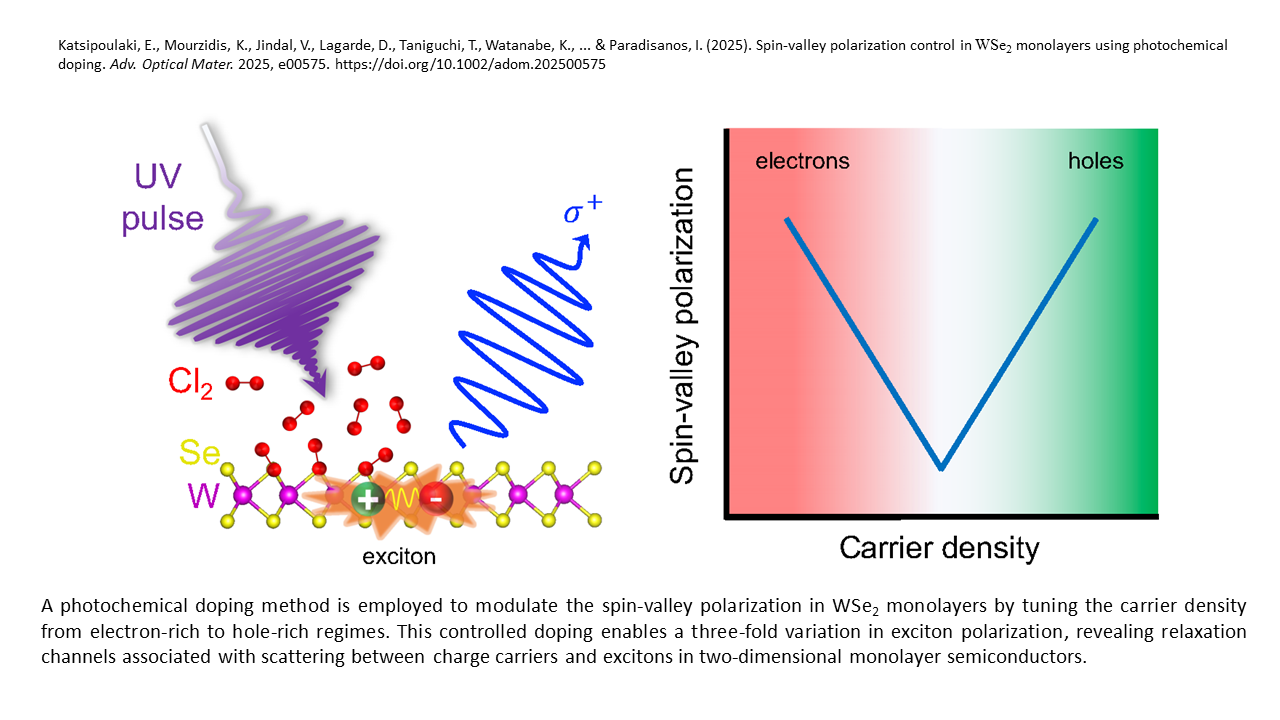
We’re excited to share our latest publication “Spin-Valley Polarization Control in WSe2 Monolayers using Photochemical Doping”, in Advanced Optical Materials. This outstanding work was carried out by researchers from the Institute of Electronic Structure and Laser (IESL/FORTH) - Eirini Katsipoulaki, Georgios Kopidakis, Emmanuel Stratakis, George Kioseoglou and Ioannis Paradisanos - in collaboration with Konstantinos Mourzidis, Vishwas Jindal, Delphine Lagarde, Xavier Marie from INSA-CNRS (France), Takashi Taniguchi and Kenji Watanabe from the National Institute for Materials Science (Japan), and Mikhail M. Glazov from the Ioffe Institute (Russia).
Summary
This recent study advances our understanding of the exciton spin relaxation in the limit of strong scattering with carriers and control of the spin-valley polarization degree in transition metal dichalcogenide (TMD) monolayers, a key step toward developing valleytronic and optoelectronic applications.
First time observations:
1. New tuning mechanism of spin-valley polarization: a precise, single-shot photochemical doping method eliminates the complexities of electrostatically-gated devices, offering a practical approach for studying valleytronic properties in TMDs.
2. Optical emission readout of the impact of both electrons and holes in the spin-valley relaxation process.
3. Strong tunability of exciton’s circular polarization degree: a threefold modulation was achieved in the carrier density range studied.
Reference
E. Katsipoulaki, K. Mourzidis, V. Jindal, D. Lagarde, T. Taniguchi, K. … & I. (2025). Paradisanos, Spin-Valley Polarization Control in WSe2 Monolayers using Photochemical Doping. Adv. Optical Mater. 2025, e00575. https://doi.org/10.1002/adom.202500575
