
We are proud to announce the publication of a new research study by M. Androulidaki [1] from the IESL–FORTH MRG team [2], in collaboration with Professor Nikos Chaniotakis [3] from the Department of Chemistry, University of Crete. The study, entitled “Nanocage-mediated enzyme stabilization: The effect of size and charge”, has been published in the prestigious journal Sensors and Actuators B: Chemical.
Abstract
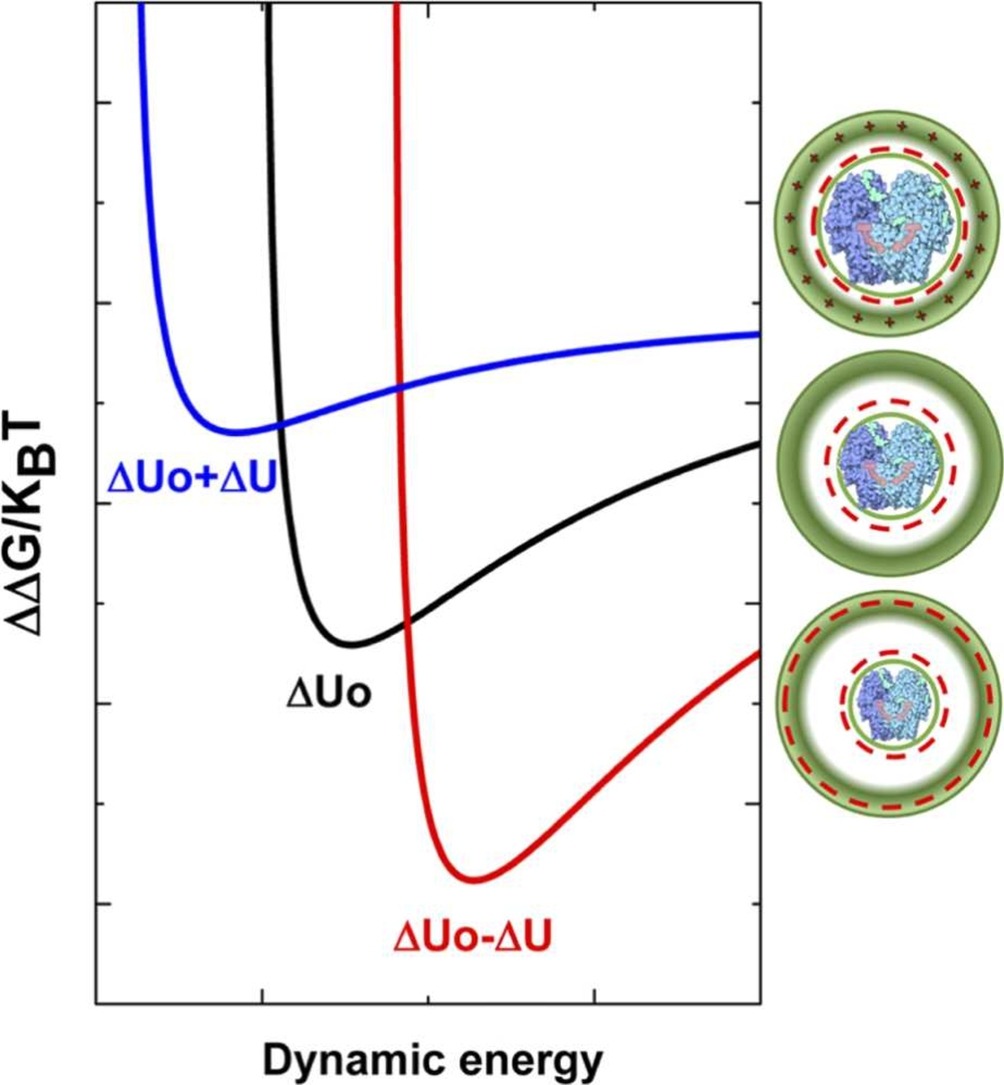
Enzymes are tools utilised in many scientific disciplines. The specific protein employed for each application depends on its specific activity, as well as its physical characteristics, and specifically its operation stability over time. These properties depend not only on the enzyme itself, and on the surrounding environment. The outer boundary, being solvation, cellular crowding, immobilization, or synthetic encapsulation modulates both stability and accessibility by imposing confinement and regulating molecular diffusion. Thus, enzyme stabilization and functional accessibility across disciplines is less about modifying the protein alone, but also on the precise engineering of the spatial and physicochemical properties of its environment. Here, we expand on the theoretical aspect regarding the effect of the protein stabilization effect within solid nanostructures, and its possible effect on the biosensor performance. This work focusses on the effect of not only the size of the nanocavity, but also on the type of solvent utilized, which in turn determines the surface charge. This information is vital in designing the appropriate nanocavity to be used for the immobilization and stabilization of proteins for use in biotechnology applications, such as biosensors. It is shown that the inclusion in a nanocage and the potential difference between the cavity walls and the protein surface determines the energy of the system, thus altering the observed stabilization effect. Based on these results, the charge type and density of the cage must be controlled for optimum protein stabilization, which will result the improvement of a biosensor performance, especially regarding its signal stability and lifetime.
Reference: Chaniotakis, N., & Androulidaki, M. (2026). Nanocage-Mediated Enzyme Stabilization: The Effect of Size and Charge. Sensors and Actuators B: Chemical, 140690. Doi: https://doi.org/10.1016/j.snb.2026.140690 [4]