
News
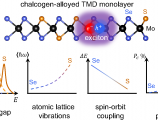
A new study entitled “Alloy Engineering of Excitonic Properties in TMD Monolayers” led by IESL-FORTH, in collaboration with international research institutions, has been published in Physical Review Materials and selected as an Editor's Suggestion, recognizing its scientific significance.
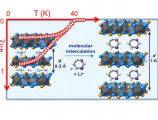
Latest work from FORTH’s QMM Lab explores a fundamental question in condensed matter physics: what drives superconductivity—enabling materials to carry electricity without resistance—and, in particular, what controls its emergence at relatively high temperatures in iron-based materials?
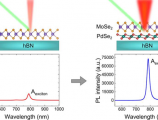
A new study published in Nano Letters highlights the strong international character of collaborative research in the field of two-dimensional materials and van der Waals heterostructures.