

News
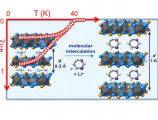
Latest work from FORTH’s QMM Lab explores a fundamental question in condensed matter physics: what drives superconductivity—enabling materials to carry electricity without resistance—and, in particular, what controls its emergence at relatively high temperatures in iron-based materials?
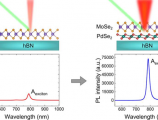
A new study published in Nano Letters highlights the strong international character of collaborative research in the field of two-dimensional materials and van der Waals heterostructures.
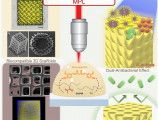
Can a natural bioactive molecule become an integral part of the 3D microfabrication process itself?
In this work, published in the journal Advanced Functional Materials, we demonstrate a one-step multiphoton lithography strategy in which curcumin serves not only as a photosensitizer for the fabrication of high-resolution GelMA 3D scaffolds, but also as a bioactive component that endows the resulting structures with advanced functional properties.
The work was carried out at the Institute of Electronic Structure and Laser (IESL), Foundation for Research and Technology-Hellas (FORTH), by the TERMIm Lab and the NLL Group, in collaboration with the Department of Materials Science and Engineering, University of Crete.